

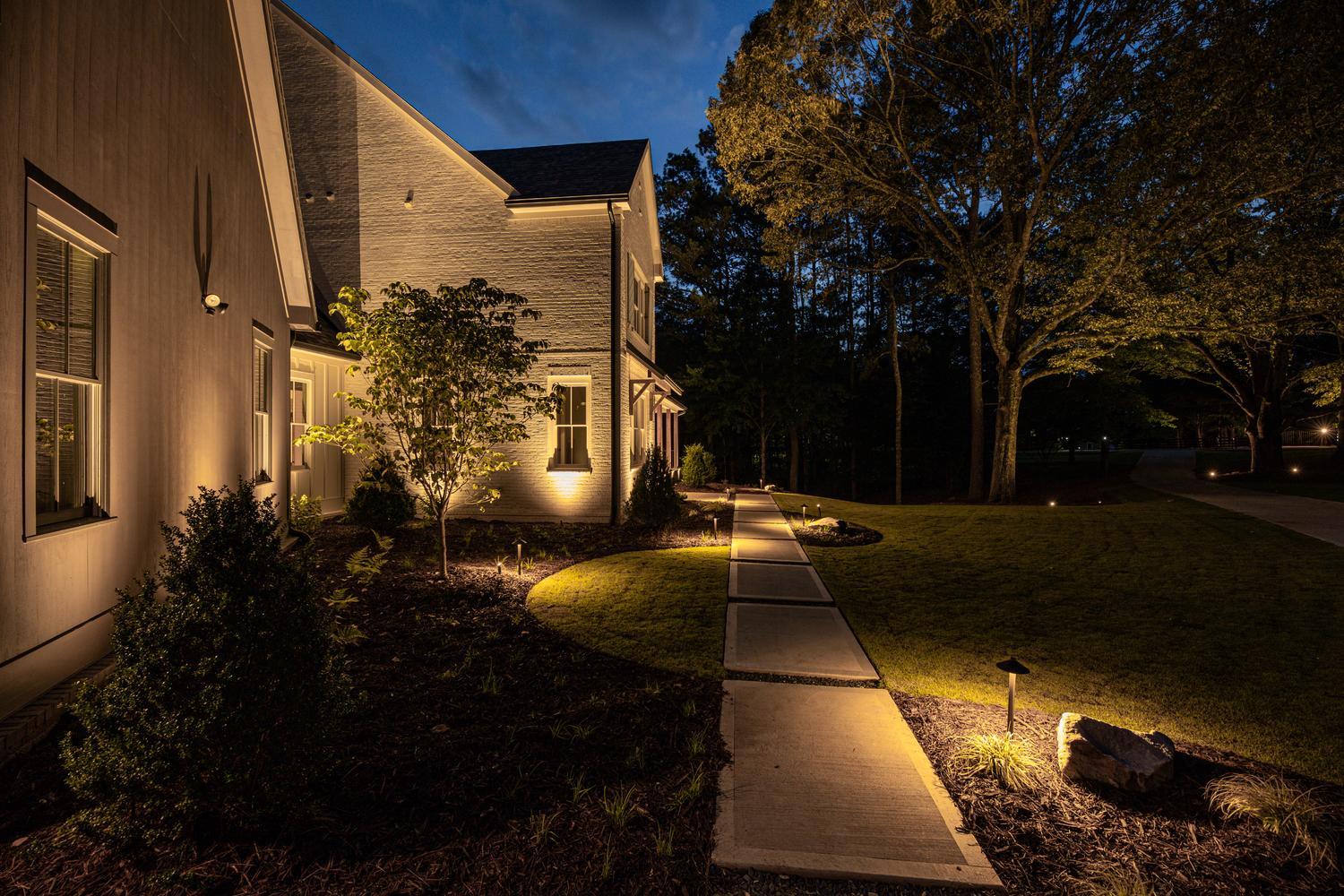
When designing residential outdoor lighting in Richmond, every fixture and layer of lighting should create a complete environment. Homeowners and guests shouldn't feel disconnected from the patio if they are walking along a path or relaxing by the fire pit. Our designers approach each property as four areas: the approach, the house itself, the planting beds and trees, and the back living space. Each area has a different purpose, and each requires a different lighting strategy. At Outdoor Lighting Perspectives of Richmond & Charlottesville, thoughtful design brings those individual areas together.
Light the Approach for a Safe, Welcoming Arrival
The approach to your home should be easily navigable and lend to the curb appeal of the house. Our team may recommend illuminating walkways, but also steps and entry points. If you have multiple steps between the driveway and front door, recessed lighting set into the steps might be a good option. Our designers approach pathway lighting based on how people will actually move across the property. Placing lights at rigid intervals does not take into account the fluid movements of people.
Use Lighting to Reveal the Home’s Architecture
The next layer of lighting is the house itself. Architectural lighting highlights aspects of the house that give a home its character. Columns and rooflines give dramatic visual lines, while lighting stonework or weathered wood can bring the character to the forefront.
A professional outdoor lighting installation in Richmond, VA takes into account how light looks from a variety of angles. Lighting should look attractive from the street and driveway while creating a balanced transition between the illuminated home and surrounding landscape.
Add Depth with Planting Bed and Tree Lighting
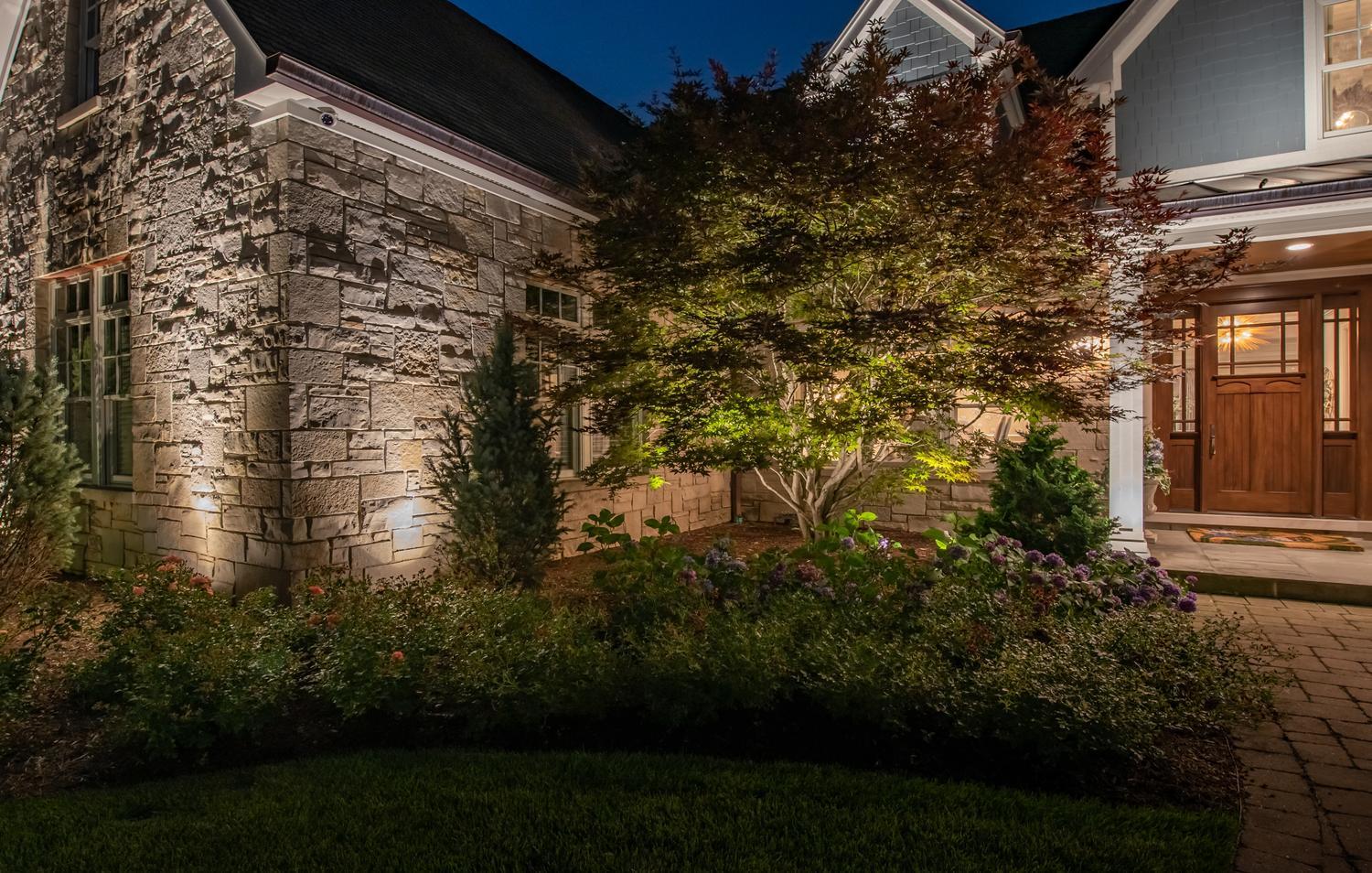
Landscape lighting fills the visual space between the architecture and the edges of the property. Trees, shrubs, gardens, and planting beds help create layers so the home does not appear to be floating in darkness.
Different landscape features call for different techniques. Uplighting can emphasize the height and structure of a mature tree, while softer illumination can bring attention to shrubs, flowers, and textured garden beds. Lighting selected focal points instead of every plant helps preserve contrast and gives the landscape dimension.
For homeowners planning residential outdoor lighting for Richmond, Virginia, this layer is especially important because landscaping often represents a significant part of a property's daytime character. Professional lighting allows those features to remain part of the view after dark.
Homeowners beginning to plan their system can also explore Outdoor Lighting Perspectives’ free outdoor lighting design guide for additional inspiration.
Make the Back Living Space Work After Sunset
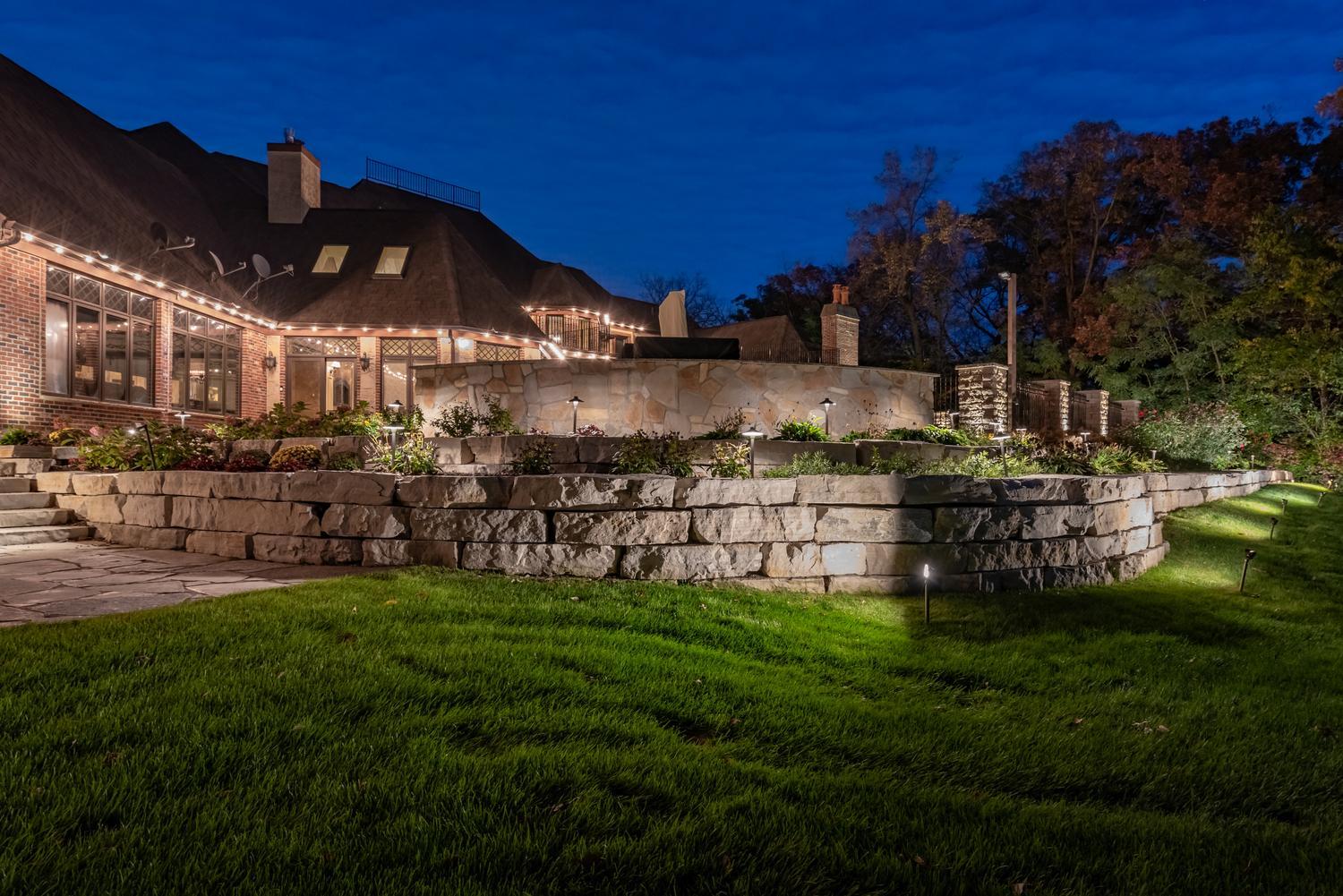
The backyard has another responsibility entirely: it needs to function. Patios, decks, porches, grilling areas, pools, and outdoor gathering spaces should be comfortable places to spend time after the sun goes down.
Effective deck and patio lighting should support how the space is used. Steps and transitions need visibility, while seating and entertaining areas benefit from softer illumination that creates atmosphere without producing uncomfortable glare.
Connecting the backyard lighting to nearby paths, landscaping, and architectural features also prevents the outdoor living area from feeling isolated from the rest of the property.
Bring the Four Parts Together with Outdoor Lighting Perspectives
The most successful lighting systems are designed as a complete nighttime experience. DIY fixtures, or lighting installed by a handyman, lack the cohesion of a complete property design that Outdoor Lighting Perspectives offers. Our team can develop a custom plan that brings those four areas together around your home, landscape, and priorities. Contact us to request a complimentary design consultation and start planning your outdoor lighting system.