

We get asked this question from homeowners a lot. Usually, it comes up in a driveway right around dusk, with a homeowner pointing up at the gutters, then down at the shrubs, and asking which way they should go.
Fair question. Both options light up and accentuate the house, and that's the whole point of each. Permanent roofline lighting traces the top edge. Architectural lighting generally works from the ground and the walls. You could do both, sure. But most folks around Cornelius and Mooresville pick one and end up perfectly happy.
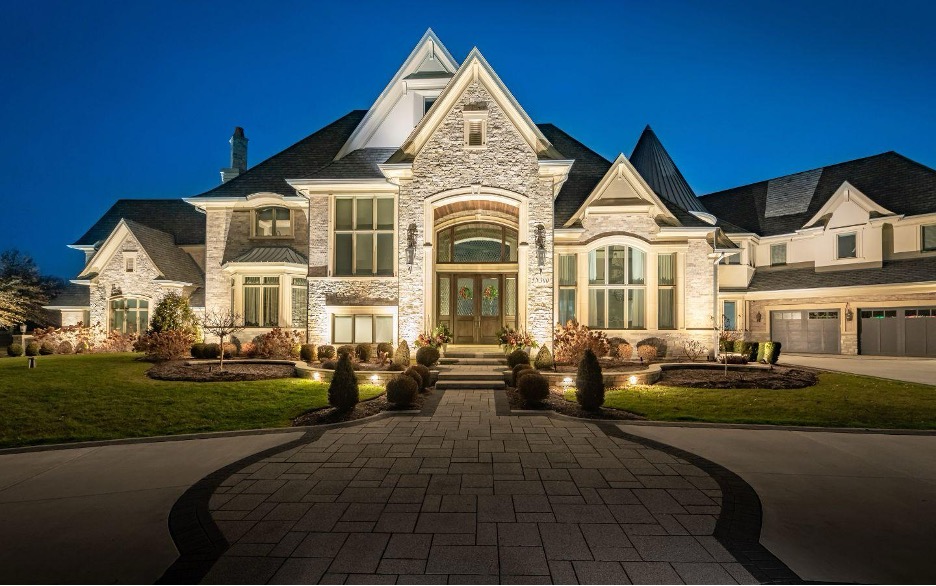
Here is how we'd explain it if you were standing out front with us …
Permanent Roofline Lighting, Minus the Sales Pitch
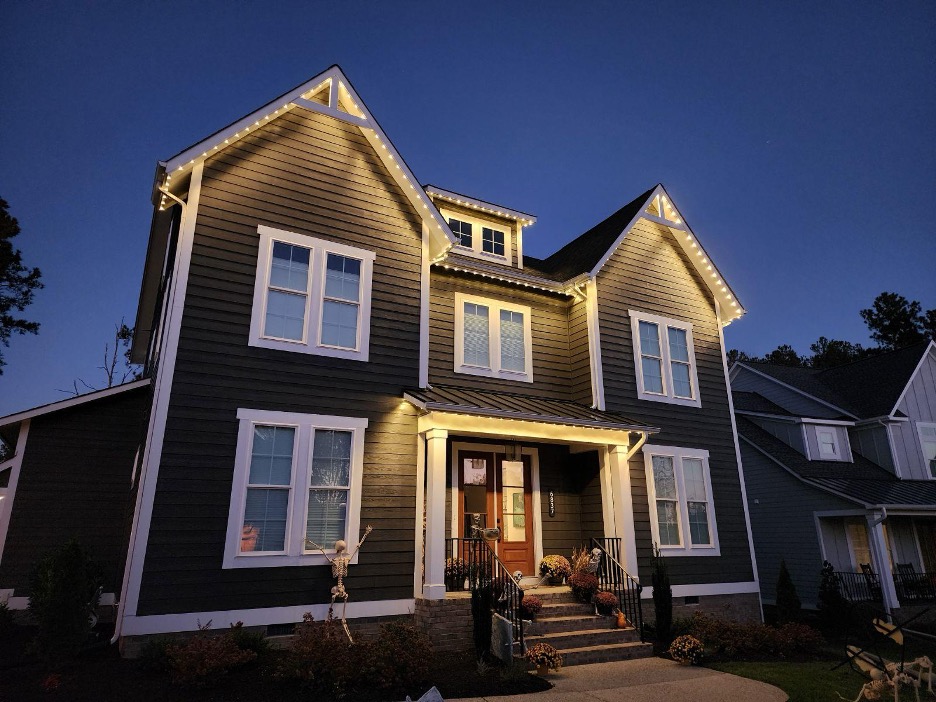
Picture a thin track tucked up under your eaves, painted to match the trim, with small LED points spaced along it. That's permanent roofline lighting. In daylight you'd have to look hard to find it. After dark it's a different story.
Everything runs from an app. Most of our clients leave it on a soft warm white on regular nights. Then October rolls around and they flip it to orange. December, red and green. Some people run their team colors on game day, win or lose.
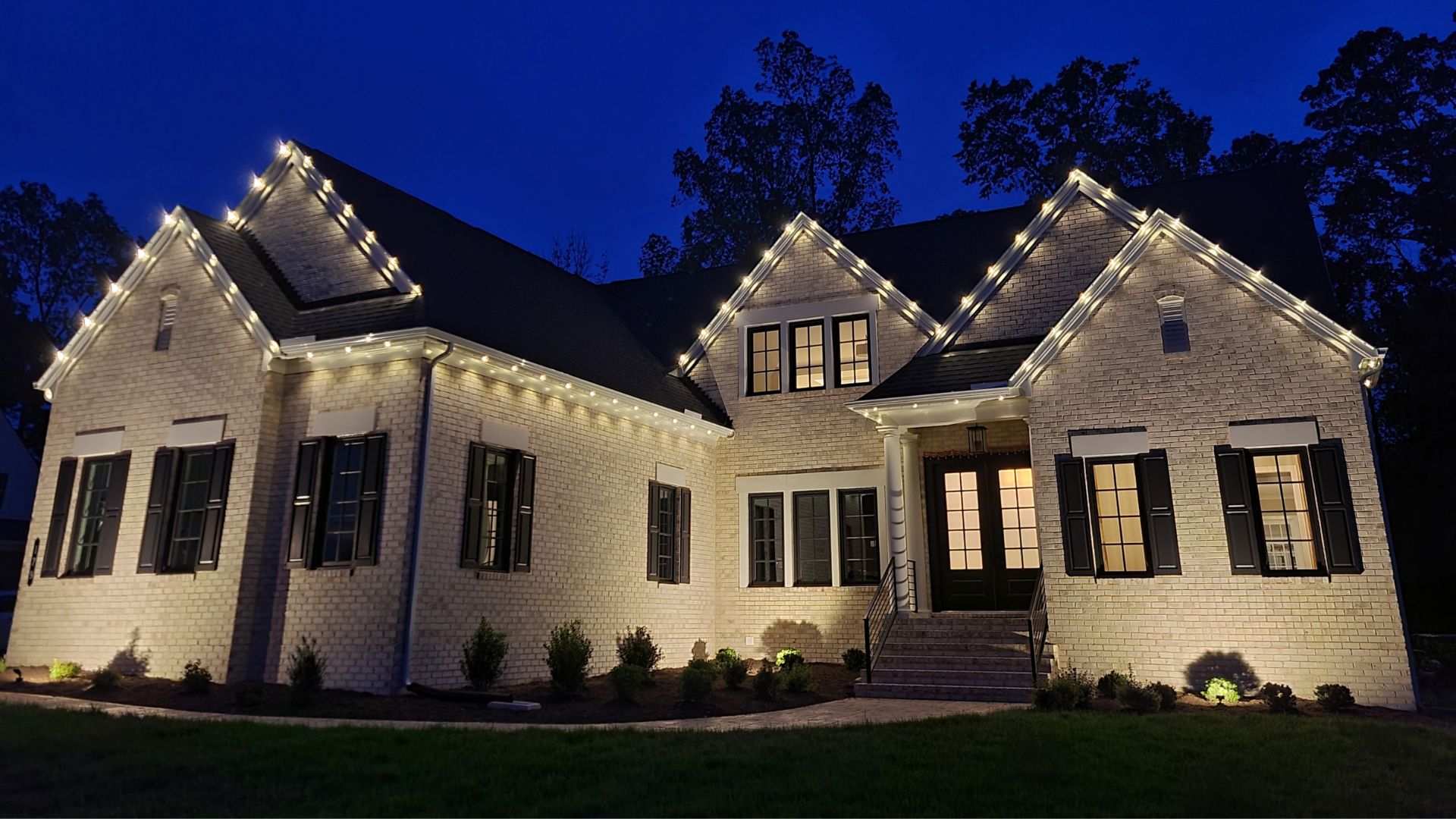
Honestly though, the biggest reason people call us about it is the ladder. Nobody misses wrestling a tangle of holiday lights onto a two-story roof the weekend after Thanksgiving. Or pulling them down in January when it's 38-degrees and drizzling. With a permanent system that job just goes away.
It looks best on houses with a lot going on up top. Steep gables, dormers, a long ridge line. And if you're on the water, think about this one: the back of your house is the side boaters see. A lit roofline shows up from clear across the cove.
Here's the catch. Roofline lighting draws the outline of the house, and that's about it. Your stone front, the columns by the door, the porch? They stay dark unless something else lights them.
Architectural Lighting and Why It Feels Different
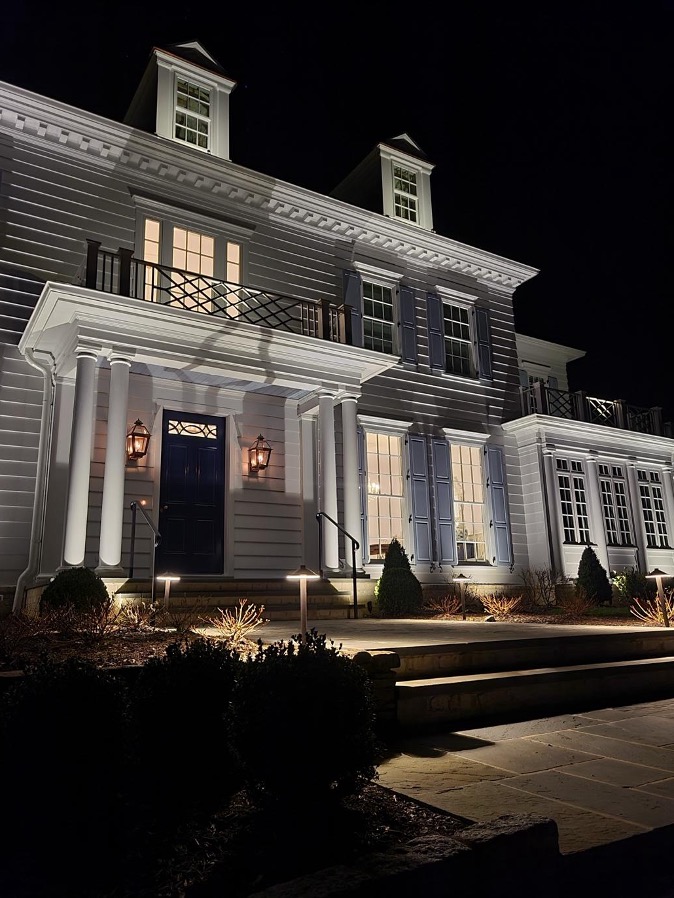
Architectural lighting is the other road, and it's quieter. Fixtures sit down in the beds or get mounted on the house, aimed so the light lands on whatever makes your home look like yours.
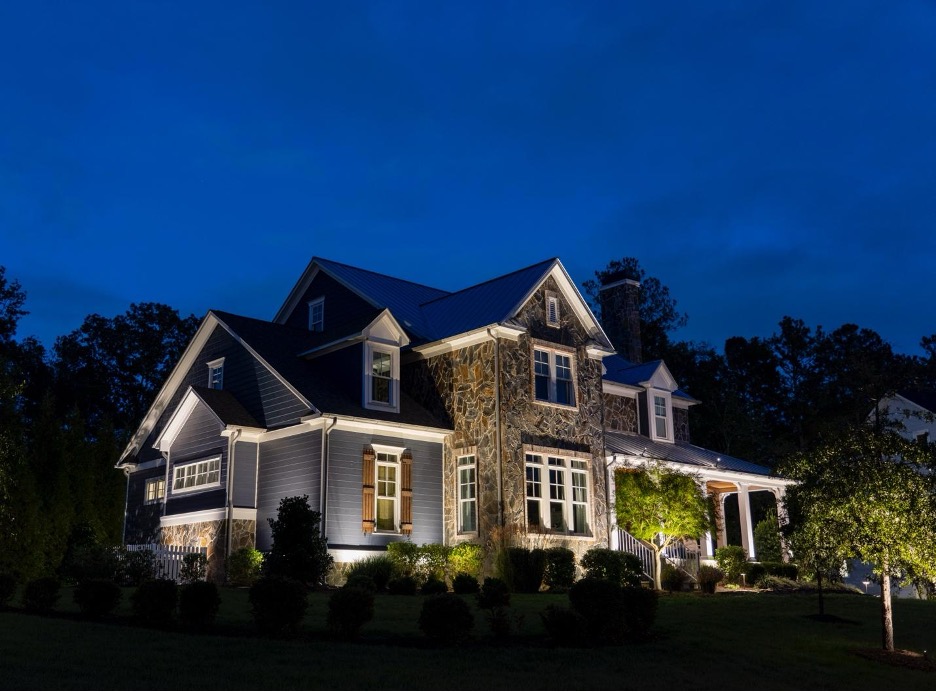
Our designers pick a technique based on what they're looking at. A stacked stone chimney usually gets grazed, which means the fixture sits tight to the wall and the light rakes up across it, so every ledge throws a little shadow. Columns get uplit. Big flat walls might get a wider wash. Over the front door or the garage, the light often comes down from the eaves instead of up.
These systems are typically low voltage outdoor lighting, so they sip power and stay safe to work around in the yard. The effect is warm and a little moody, in the good way. Shadow does half the work. That's a big reason architectural lighting shows up in so much curb appeal lighting.
If your house has brick, stone, board and batten, a deep porch, or an entry you're proud of, this is probably your pick.
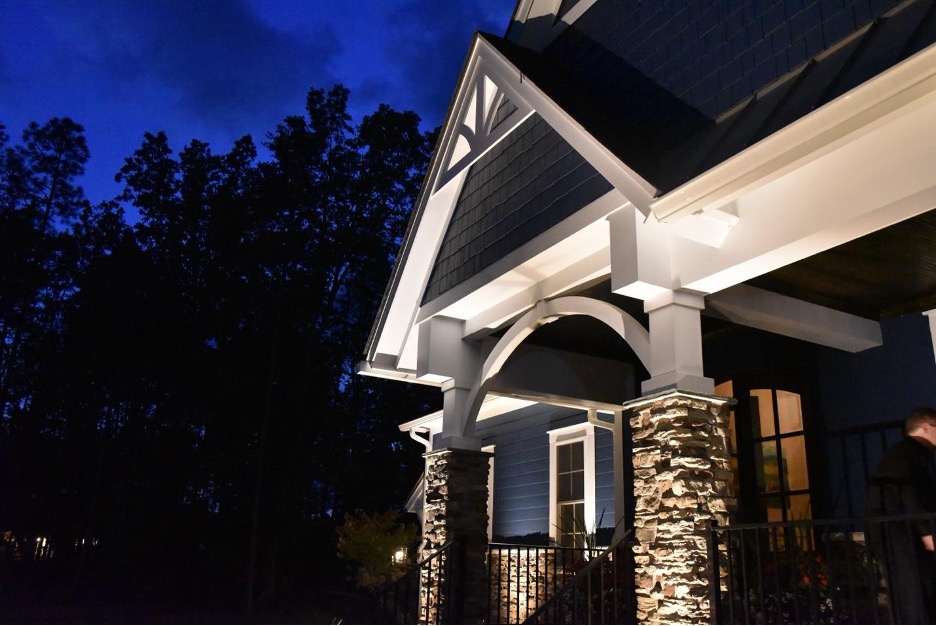
What you give up is color. It's mostly warm white. We do carry color changing lighting for people who want options, but if decorating for every holiday is a big deal at your house, roofline lighting will make you happier.
Side by Side Comparison:
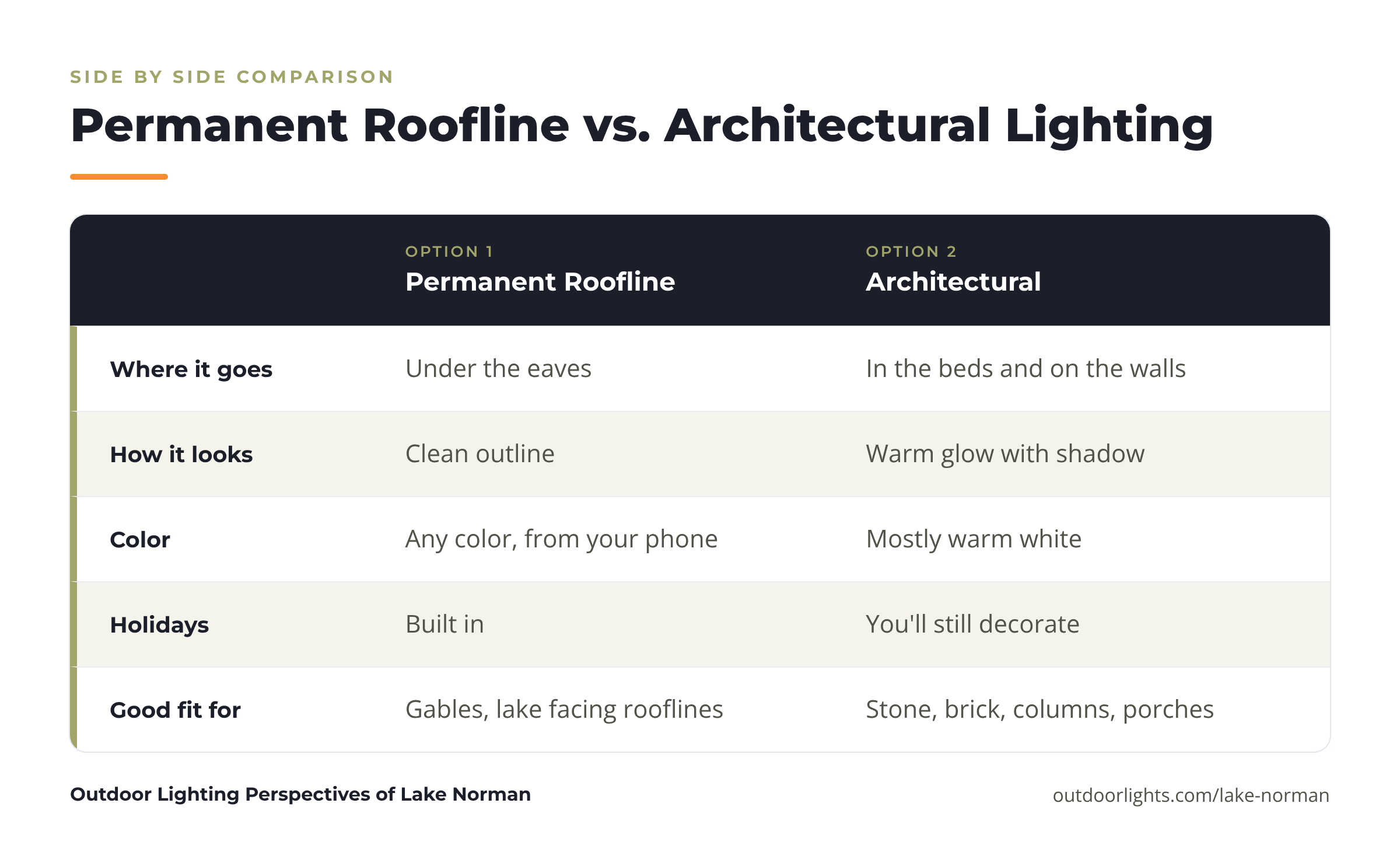
So Which One?
Start with what you like most about your house. Seriously, go stand at the curb and look. If your eye goes to the roof, roofline lighting. If it goes to the stone or the door, architectural.
Then be honest about holidays. Some families put up a tree and call it good. Others have inflatables in the yard by October 1st, as the fall and winter holidays roll in. You know which one you are.
Think about where people see the house from, too. Plenty of lake homes get more eyes from the water than from the street.
Check your HOA. A bunch of neighborhoods around Lake Norman have rules about glare and color, and some are stricter than others. We investigate that during the design, so you don't get a letter in the mailbox three weeks later.
And money matters, obviously. Our pricing guide has ballpark numbers, and if you'd like to spread it out, there's financing.
Can you do both? Yes. Some people do and it looks great. Most don't, though. They pick one for the house and put the rest toward the yard. Which brings us to landscape lighting.
Landscape Lighting Is Its Own Decision
Roofline and architectural are both about the house. Landscape lighting is about everything else on the lot. The question is pretty basic: do you want the light to stop at your walls, or keep going?
Here's what we mean. Light only the house and it can look a little stranded, like it's sitting in a black hole. Put some light up into that big oak out front, along the walk, across the beds, and suddenly the whole property makes sense at night.
There's a practical side too. Pathway lighting keeps guests from guessing where the walk turns. And on a lot that drops off toward the lake, lighting the steps down to the dock isn't decoration. It's how nobody rolls an ankle coming back up from the boat at 10 p.m. Around back, deck and patio lighting buys you a few more hours outside on those long summer nights.
That's why so many people add landscape lighting no matter which way they went on the house. It pairs fine with either one.
You don't have to do it all in one go, either. A lot of clients light the house first and come back for the yard a season or two later. Tell us that up front and we'll set up the first install so adding on is easy.
Come See It at Night
Pictures help, but nothing beats seeing it on your own house. Every project with Outdoor Lighting Perspectives of Lake Norman starts with a free consultation, and we'll do a nighttime demo before anything gets installed. Want to poke around first? Our photo gallery has plenty of examples, and the free design guide is worth a read.
Once it's in, our Shine365 program and service and maintenance crew keep it working right.
Still stuck between the two? That's normal. Set up a free consultation and we'll walk the yard with you and figure it out together.