

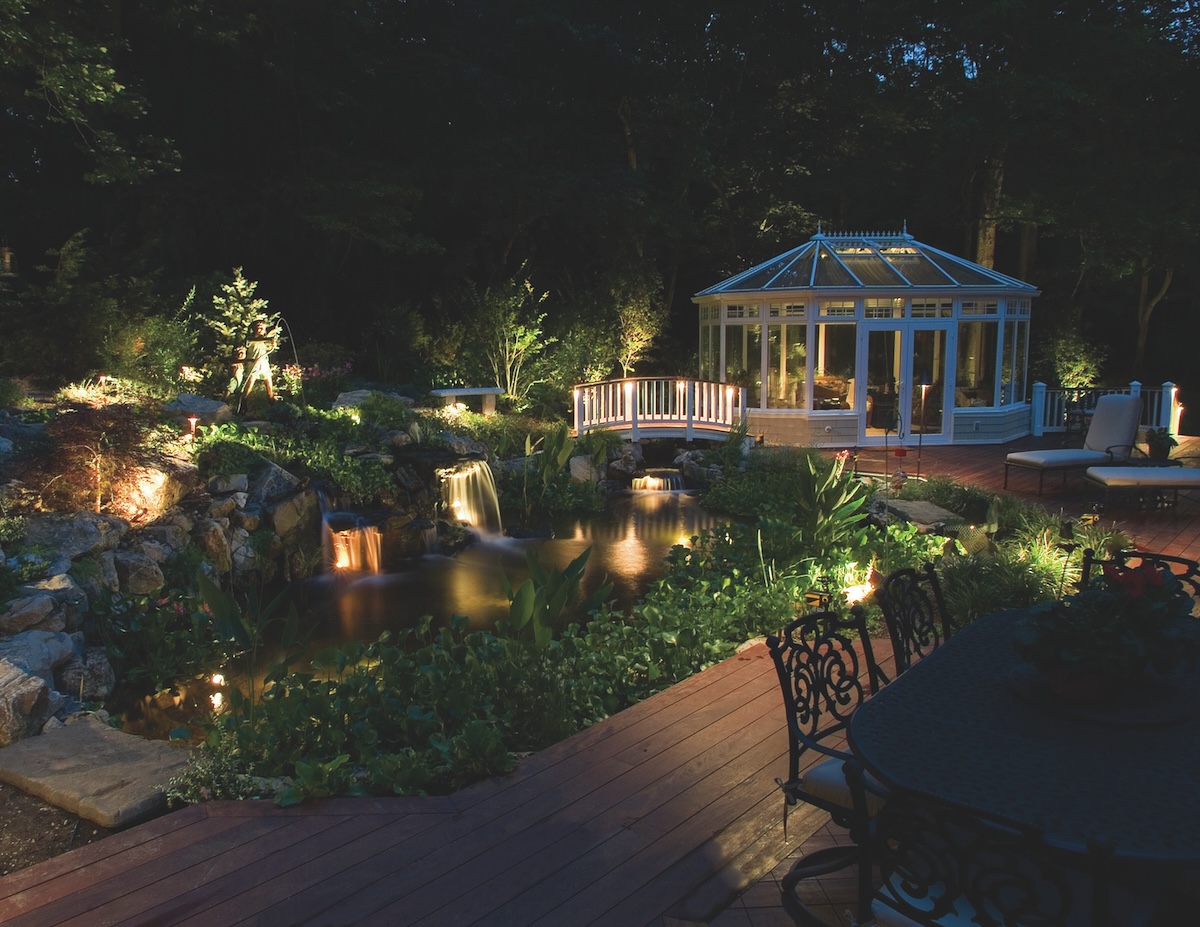
Part of what makes professional Dayton landscape lighting work as well as it does is the contrast. Some parts of the property should be bright and others can fall into darkness. To have that contrast is to invite a sense of depth.
It’s easier to notice when depth is absent. Under even lights, trees flatten into the background and architecture feels one-dimensional. The property may be bright, and in that way, safer and more functional, but it can still be visually uninteresting. Light works better in layers, often when coming from different directions. That’s what makes uplighting and downlighting powerful tools for outdoor lighting.
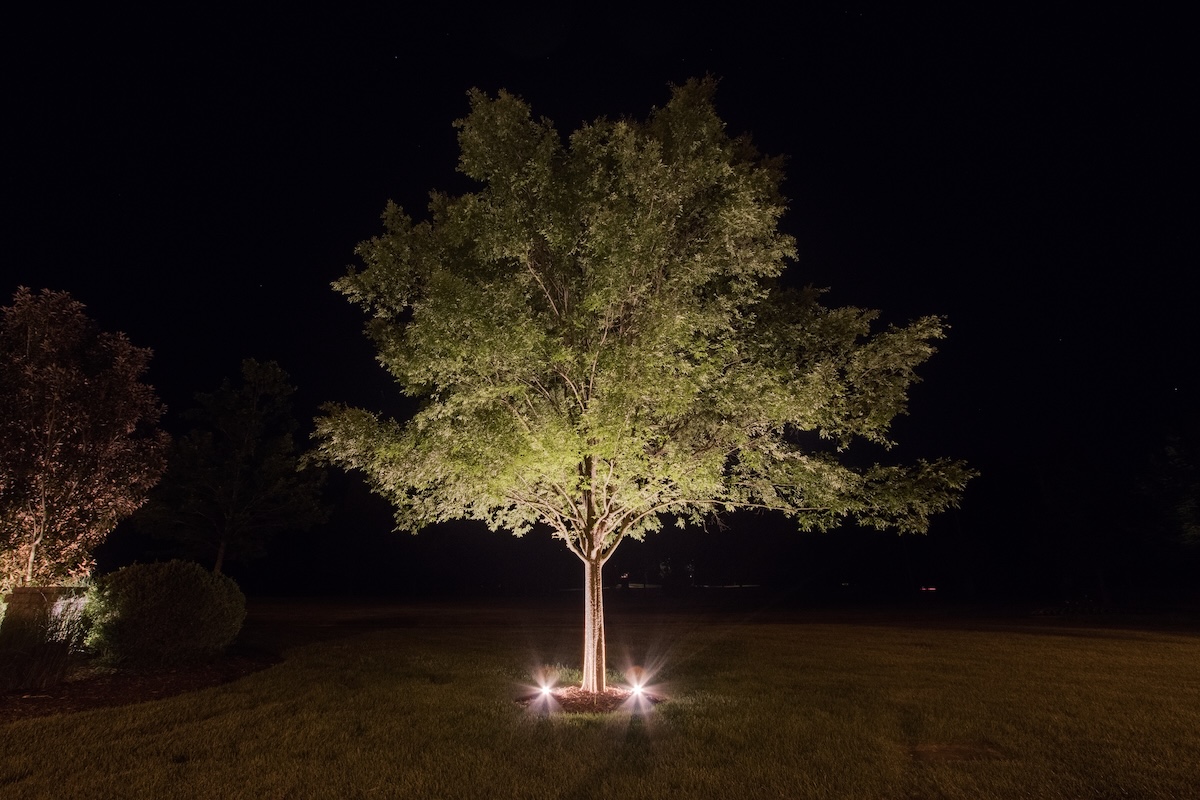
What Is Uplighting?
With uplight, fixtures are placed at or near ground level and pointed upward. This works well for features with natural height like mature trees. Light their bases and then your eye can follow all the way up the trunk to the canopy. Brick and stone also benefit from this treatment, as do columns, chimneys, and gables.
What Is Downlighting?
Downlighting begins above eye level and points downward. The result feels softer because it follows the natural direction we expect light to come from. Fixtures can be positioned in mature trees or other high-up locations to cast light on walkways and outdoor living areas, among others. Instead of emphasizing a place or a point, downlighting tends to emphasize the surfaces below.
Moonlighting Is a Special Kind of Downlighting
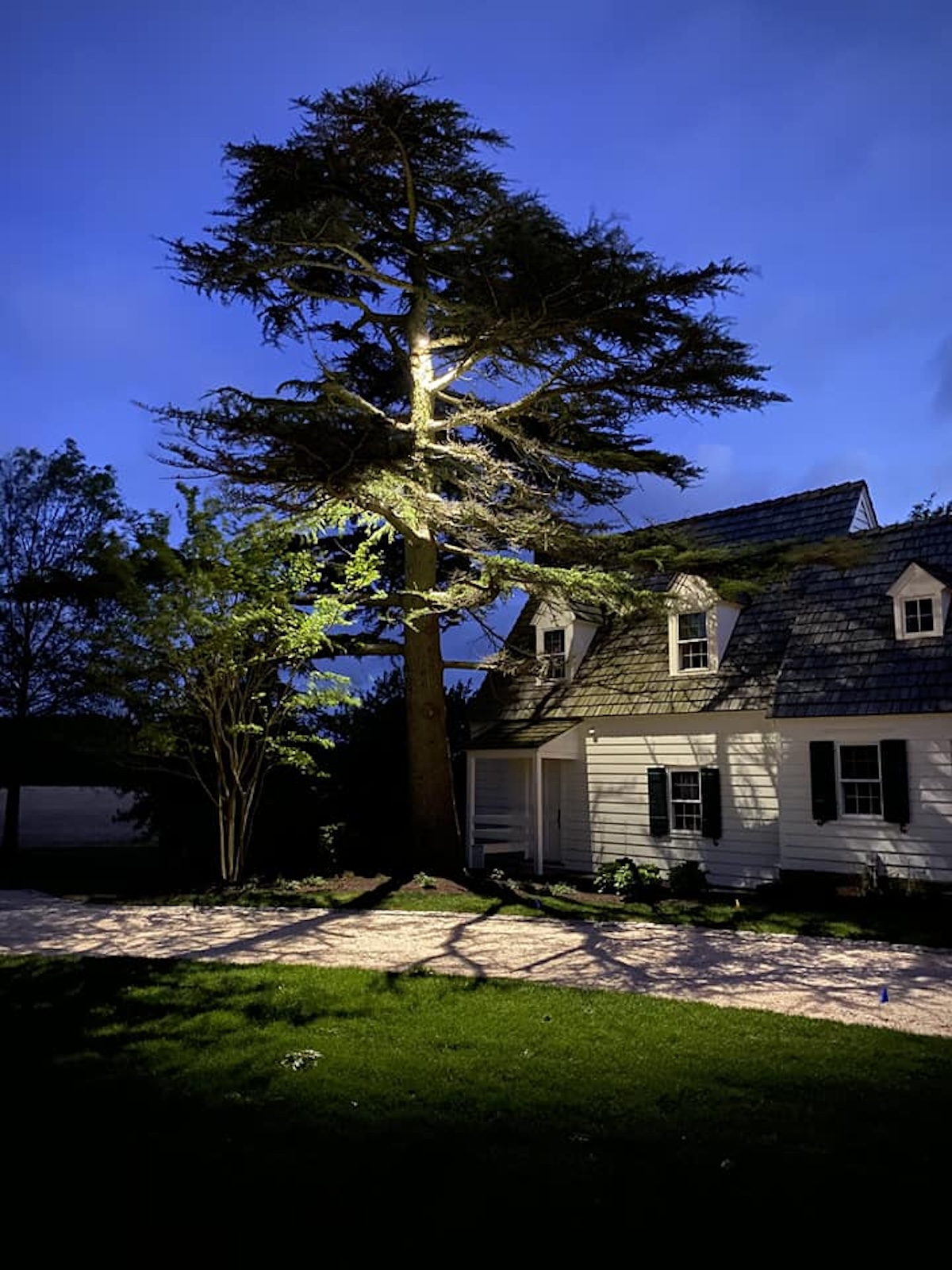
Moonlighting places fixtures high within mature trees so the light passes through branches before reaching the ground. Branches and leaves break up the beam and create natural-looking shadows below.
It’s hard to see the effect at first glance, but that’s part of what makes it appealing. You notice first the soft pattern of light before you notice the fixture creating it. For properties with established trees, moonlighting can create one of the most natural nighttime effects available.
The Best Designs Often Use Both Uplighting & Downlighting
Uplighting often creates drama where downlighting makes softness. This is no hard rule, but it’s a useful shorthand. Uplighting is often not subtle, and that’s a lot of what makes it attractive. It deliberately catches your eye. Downlighting is more likely to make a larger area feel like a place worth lingering in.
The best yards often use both. Too many uplights can feel repetitive and the same can be said if all light comes from above. Variation is what makes designs work—uplighting and downlighting, light and shadow. This is what gives properties a sense of depth, and that’s very desirable.
An uplighted tree may become a focal point while downlighting nearby softly illuminates a path. Architectural uplighting can define the house while moonlighting creates quieter areas in the landscape. Much of the work of professional landscape lighting designers is to figure out which features deserve attention and how best to make that happen.
Need Uplighting or Downlighting in Dayton?
Outdoor Lighting Perspectives of Dayton & Cincinnati can design a system using uplighting, downlighting, moonlighting, and other techniques based on the architecture and landscape already on your property.
Looking for outdoor lighting companies near me? Call Outdoor Lighting Perspectives.
For experts in outdoor lighting design, installation, and maintenance, call one of the most trusted names in the business. Outdoor Lighting Perspectives is eager to speak with you. Call us today at (937) 421-8101.