

Mature trees are often the most striking features on Cincinnati properties. They give their properties a sense of height and structure, not to mention shade during the day. And at a distance, it feels like permanence, but only during the day. The dark can still swallow the yard whole without Cincinnati outdoor lighting in place.
Landscape lighting can bring back the property, though. The best technique to make this happen depends on what you want the tree to do after dark. Uplighting emphasizes the tree itself and downlighting illuminates the space below, with moonlighting being a particularly soft and natural subset of it. Both can work, depending on what you have in mind.
Uplighting Draws Attention Upward
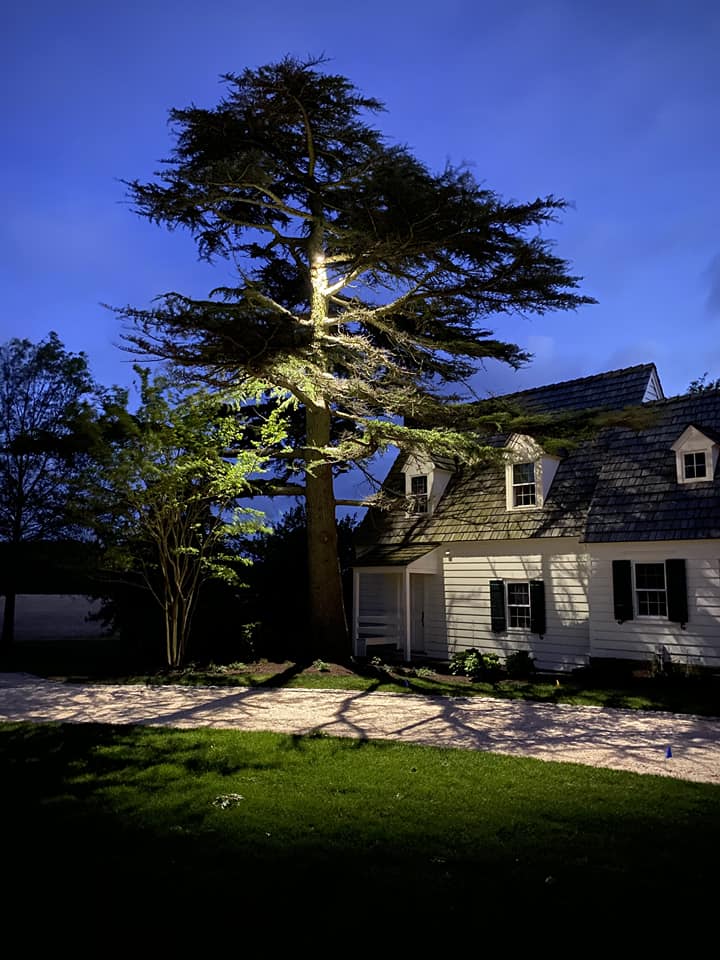
Uplighting places fixtures at ground level and aims the beam toward the trunk and canopy. If your goal is to make a mature tree look like a focal point at night, this is one of the best ways to do it.
Light is placed at the base of the trunk. Then it is cast upward, which has the effect of first revealing the texture of the tree through little shadows being cast upward but also drawing the eye upward into the branches and the canopy. On a large tree, several fixtures can illuminate the form from different angles rather than leaving one side bright and the rest dark.
It’s a dramatic effect and you can have it without excessive brightness. This tends to work for trees with interesting trunks or branching patterns, and the exact placement of the lights varies from tree to tree.
Downlighting Creates Softer Illumination Below the Tree
Downlighting starts above eye level and directs light toward the ground. The tree is not the subject here, but rather the means by which light is cast downward. The light then shines on a walkway or gathering area underneath.
The light travels downward, which makes it feel more familiar and subdued. If your goal is to illuminate an area without making the fixture itself part of the view, this is one way to go about it.
Moonlighting Uses the Branches to Shape the Light
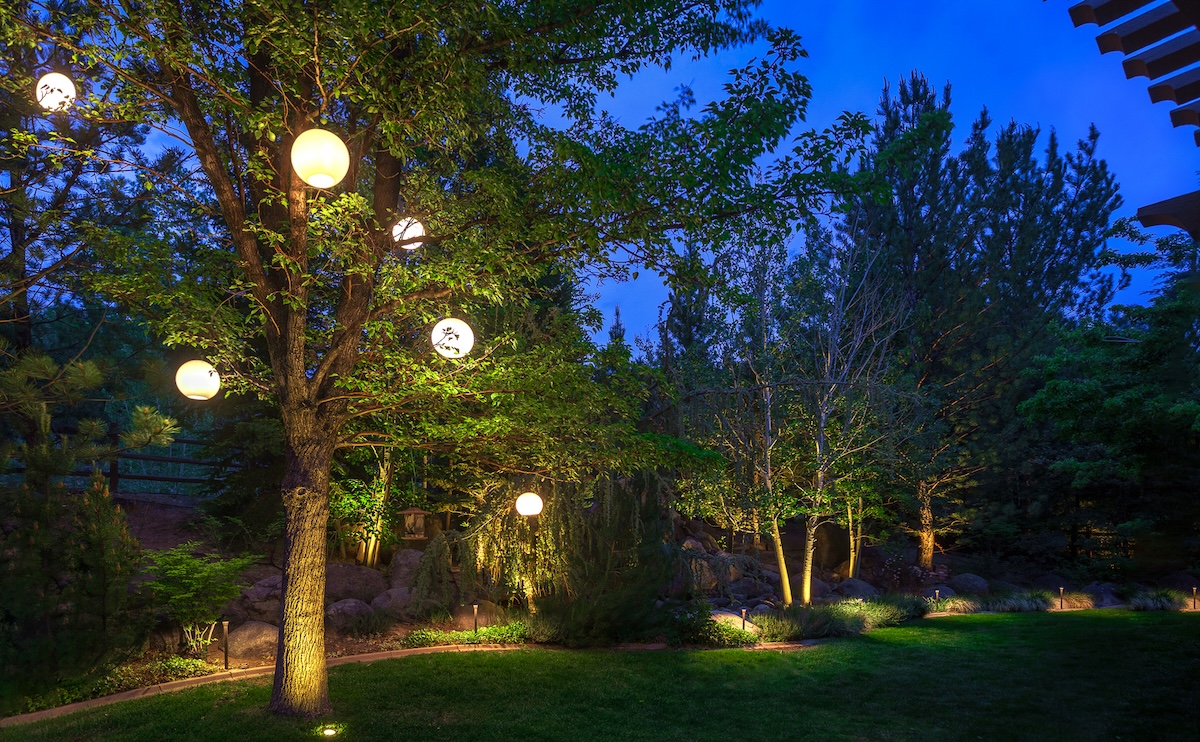
Moonlighting is a specialized form of downlighting. Fixtures are mounted high within mature trees and aimed downward through the branches.
What this does is pass light through the canopy and its branches and leaves. This interrupts the beam and casts irregular shadows below that feel a lot like natural moonlight shining through a tree. This works really well when trees are tall and have a lot of branching.
Which Technique Looks Most Natural?
That depends on what you mean by natural. Moonlighting, or downlighting more broadly, is often the least obvious because the source is high and the shadows feel familiar.
Uplighting is often used for dramatic flair. But that doesn’t mean it can’t look refined. Selecting a few trees and illuminating them with carefully chosen fixtures at a set level of brightness can fit very comfortably into a larger lighting plan.
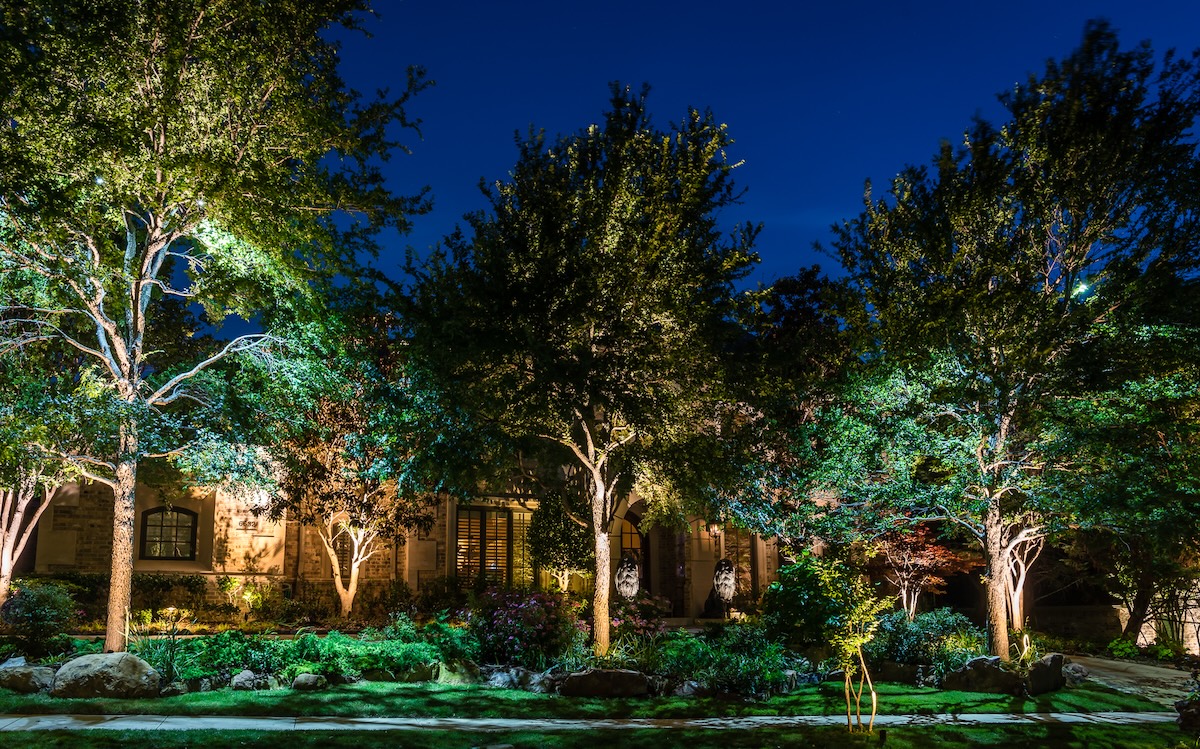
Properties often tend to do well with multiple types of lighting used together. For example, you can uplight a specimen tree near the house to draw the eye to it and because it makes a great focal point. Then another tree over a walkway can cast downlighting below to make the path safer and more attractive. You can then add other accents in the vicinity to help the whole property feel continuous.
Variation is part of what makes this work. You need both light and shadow for outdoor lighting to truly look designed.
Cincinnati Tree Lighting Designed Around the Landscape
Outdoor Lighting Perspectives of Cincinnati can use uplighting, downlighting, moonlighting, and other techniques to work with the mature trees already defining your property. The best design begins after dark, when you can see which trees disappear, which views matter most, and where a new layer of light would add the most to the landscape.
Looking for outdoor lighting companies near me? Call Outdoor Lighting Perspectives.
For experts in outdoor lighting design, installation, and maintenance, call one of the most trusted names in the business. Outdoor Lighting Perspectives is eager to speak with you. Call us today at (513) 496-1130.