

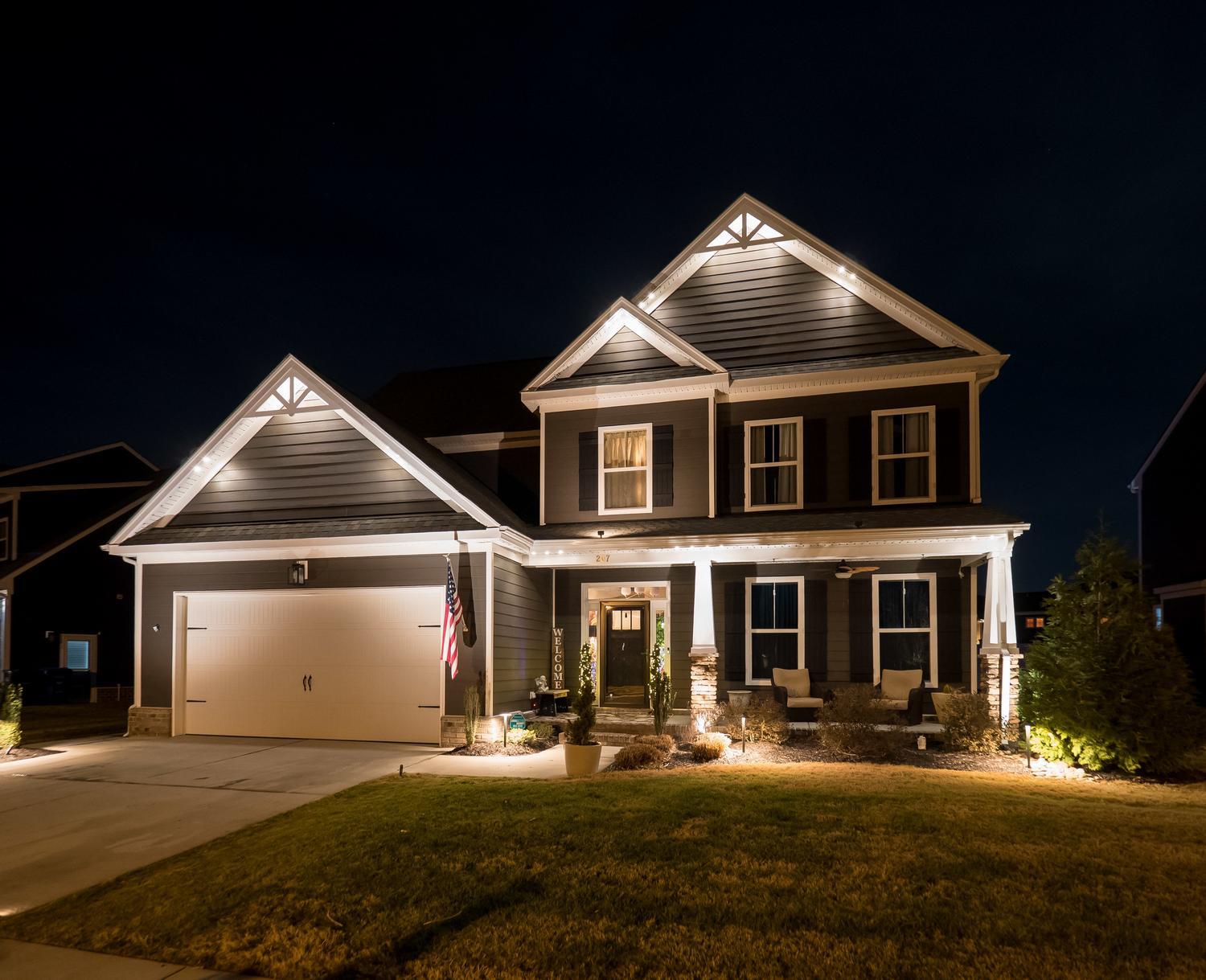
For a home, warm white in the 2700K to 3000K range is often the best color temperature. Cool white at 4000K is suitable for modern, security, or commercial settings where crisp visibility matters more than mood.
Perhaps no scenario is as deceptively complicated as trying to buy the right light bulb these days. There are many different wattages and temperatures, and even for indoor use, it’s hard to imagine how a certain bulb is going to look. This is even more the case for outdoor lighting for homes.
Color temperature is measured in kelvin, and the number tells you how warm or cool the light looks. Lower numbers lean amber and golden, like candlelight or the last hour of evening sun. Higher numbers feel more blue-white, and they’re reminiscent of daylight. For most homes and landscapes, the warmer end is what feels inviting after dark.
Outdoors, it’s hard to go wrong with warm light. Greens look greener and brick and stone keep their color at the lower end of the kelvin scale. At cooler light temperatures, colors tend to flatten and you have the vague sense of being in the doctor’s office.
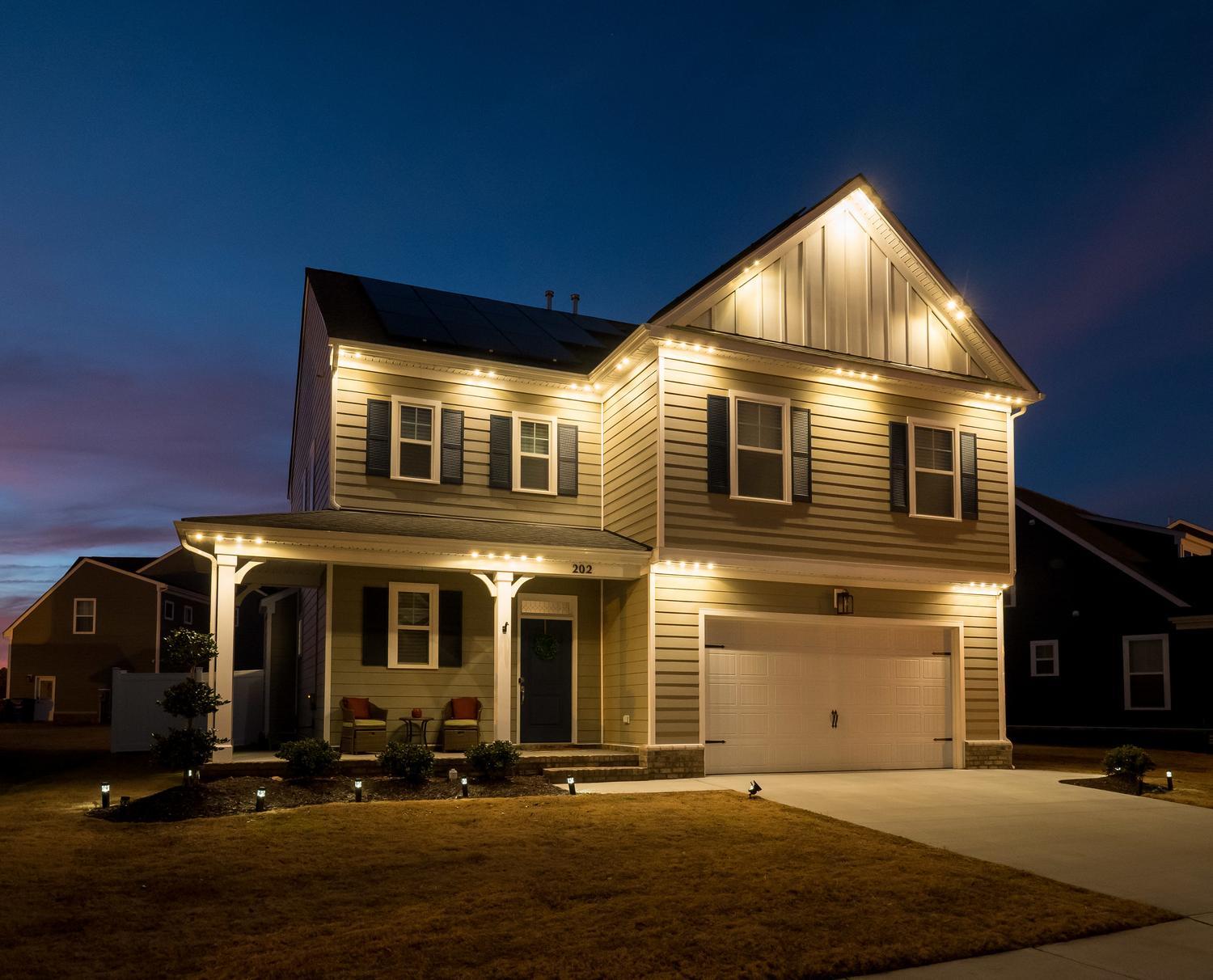
Warm light is also kinder to faces at gatherings, a fact no doubt appreciated by all guests. And it also sits comfortably alongside the glow coming from inside the house, which makes indoors and outdoors feel like one continuous space.
Cool white certainly has a place in modern architecture, to be clear. It’s great in places where there are crisp lines and a lot of concrete or steel, not to mention areas where security or commercial lighting are needed for sharper visibility. But that’s often not the case with residential yards.
As always, though, taste is a factor. That’s why there is no substitute for seeing real light on your property. To do this, you can always schedule a free consultation with Outdoor Lighting Perspectives. A COLT-certified technician will come by after dark with temporary fixtures and give you a real-life demonstration of what’s possible on your property.