

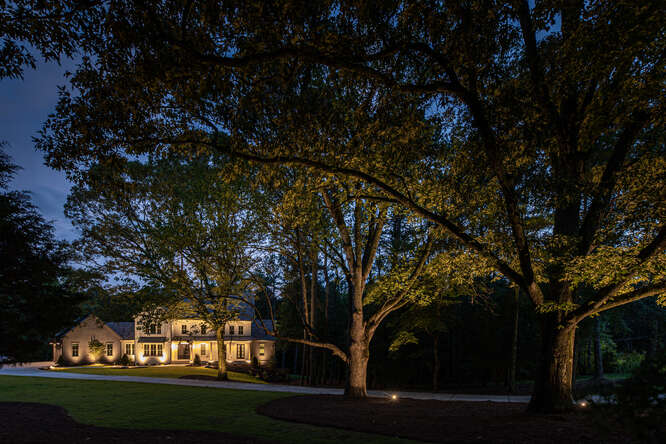
Light up Risky Corners Before Crime Finds Them
Good security lighting is about more than seeing your way to the back door. It can make the difference between a home that feels like an easy target and one that makes trouble think twice. A yard with dark corners, shadowy side paths, and blind spots near doors quietly invites trespassers and quick “grab and go” theft.
A security lighting audit is the smart first move before buying new fixtures or adding more cameras. It means taking a careful look at how your property is lit now, where it is weak, and how people actually move around your yard at night. Instead of guessing and filling your yard with random lights, you get a clear plan that fits how you live and how your home sits on the lot.
In Sandy Springs, evenings stay mild and outdoor time stretches longer as the spring moves in. Kids play later, friends linger on the patio, and people come and go after dark. That is the perfect moment to ask a simple question: does our lighting really make us feel safe, or are we just hoping for the best?
Spotting Vulnerable Zones Around Your Sandy Springs Home
Every property has “high risk” spots, even if the front porch looks bright and welcoming. In many Sandy Springs yards, the problem areas are the ones you do not see from inside the house or from the street.
Common vulnerable zones include:
- Dark side yards between homes
- Back gates and fence openings
- Tree lines and wooded edges
- Spaces under decks and stairs
- Garage sides and rear doors hidden from the road
One of the easiest ways to start a security lighting audit is to walk your property twice, once at dusk and again after full dark. Carry a small notepad or use your phone to record where you feel uneasy. Pay attention to:
- Blind spots where you cannot see clearly from a window
- Deep shadows near doors, gates, or windows
- High-traffic paths like trash routes, dog-walk areas, or kids’ shortcuts
Sandy Springs yards often have special quirks. Many lots are sloped, with driveways that drop away from the street or curve out of sight. Wooded borders can hide movement along a fence line. Pool decks and patios may feel bright when you are nearby, but steps, gates, and corners just outside that glow can be very dark.
A professional security lighting audit looks at all of this and maps out layers of light, such as:
- Safety lighting at front and back doors
- Path lighting that helps prevent trips and falls
- Focused deterrence lighting aimed along likely intruder routes
Instead of one super bright light that leaves sharp shadows, the goal is steady, comfortable light that fills in the gaps.
Smart Fixture Placement That Deters, Not Disturbs
Where you place each fixture matters as much as how bright it is. Good security lighting should make it easy for you to see outside, yet not blind you, your family, or your neighbors.
Some best practices for placement include:
- Mounting key fixtures high enough so they are hard to reach and tamper with
- Angling beams downward to reduce glare and light spill into windows
- Spacing lights so their beams overlap slightly to remove dark pockets
Different areas call for different fixture types:
- Spotlights on corners and under eaves to wash walls and cover yard edges
- Path lights along walkways, driveways, and steps
- Wall-mounted sconces at doors, garage entries, and side entrances
- Low-glare fixtures around patios and seating areas so guests stay comfortable
DIY setups often lead to common headaches. Lights can be too bright, shining into bedroom windows or across property lines. Poorly shielded beams can light up the sky more than the ground. Fixtures installed too low are easy to kick, bump, or cover, and often end up crooked or damaged.
Professional design keeps your security goals and curb appeal working together. With a custom plan and premium LED fixtures, security lighting can blend with your existing landscape and architectural lighting so the whole property looks intentional, not patched together.
Dialing in Motion Sensors and Timers for Real-Life Use
Motion-controlled lights are powerful, but only if they are tuned to the way you actually live. If the sensors are set up poorly, you end up with constant false triggers from wind, pets, or passing cars, and people stop paying attention when the lights pop on.
Key motion settings include:
- Sensitivity, how easily the sensor reacts to movement
- Detection range, how far away motion triggers the light
- Duration, how long the light stays on after activity stops
Good calibration means a person walking into the edge of your property triggers the light early enough to act as a warning, but a squirrel on a fence does not flip your whole yard on and off. Careful aiming of each sensor keeps the focus on likely approach paths, not on the street or a busy sidewalk.
Time-based controls also play a big role in security lighting systems in Sandy Springs, Georgia. A helpful setup might include:
- Dusk-to-dawn lighting for main perimeters and key sight lines
- Scheduled timers for primary entry points like front doors and driveways
- Motion-only lights in side yards, service areas, or less-used gates to save energy
As evenings stay lighter later in spring and summer, programmable systems can adjust their on and off times on their own. That means you are not constantly changing settings, and your home still looks lived in and watched over.
Integrating Security Lighting with Cameras and Smart Tech
Cameras can only record what they can see. Without the right lighting, even the best camera may end up with grainy clips, dark faces, and unclear details. Strategic lighting helps your cameras work the way you expect.
Well-planned light around camera zones can:
- Brighten faces at doors and gates so they are easier to recognize
- Light driveways and streets enough to read license plates more clearly
- Soften harsh backlighting that turns people into dark shapes
Smart controls pull it all together. With app-based systems, you can:
- Set scenes like “Away,” “Evening Entertaining,” or “Vacation” to match your plans
- Trigger certain lights when a camera senses motion or sends an alert
- Turn lights on or off remotely if something seems off while you are traveling
When lighting, sensors, and cameras are designed to work as a team, you get fewer surprises and better information when something does happen. For Sandy Springs homes with changing daylight and active outdoor schedules, this kind of coordination keeps security strong without making daily life more complicated.
Schedule Your Professional Security Lighting Audit Now
A spring security lighting audit sets you up well before summer travel, late-night cookouts, and long weekends away. This is when properties are often empty at night or full of guests arriving and leaving after dark, which makes good lighting even more important.
During a professional audit, you can expect help with:
- Finding hidden vulnerabilities in side yards, gates, and wooded edges
- Choosing fixture types and placements that fit your home and yard
- Fine-tuning motion and timer settings for comfort and reliability
- Balancing safety, security, and beauty so your home still looks inviting
Outdoor Lighting Perspectives of Atlanta designs, installs, and maintains custom outdoor and landscape lighting systems across the greater Atlanta area, including Sandy Springs. With thoughtful planning and long-term service support, security lighting systems in Sandy Springs, Georgia can protect your home, support your cameras, and still make your yard a place you enjoy every evening.