

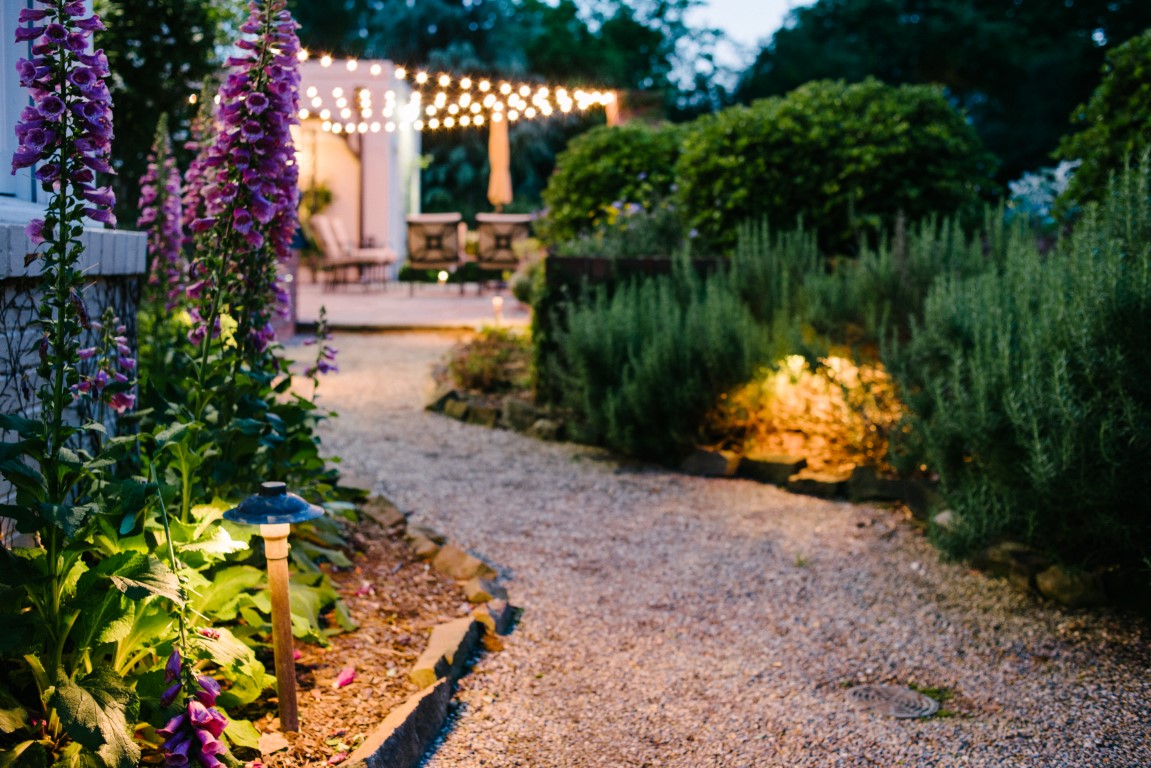
Stop Tripping in the Dark: Smarter Solar Path Lighting
Solar path lights seem simple. Push the stakes into the ground, let the sun do the work, and enjoy safe, glowing walkways at night. In reality, many Braselton homeowners end up with dim little dots of light, dark gaps on steps, and guests feeling their way along the path.
Solar outdoor lighting in Braselton, GA, can look beautiful and work well, but only when placement and sun exposure are planned with care. When those details are ignored, lights fade early, paths stay risky, and yards feel less inviting after dark. Here, we will walk through the most common solar placement mistakes, easy shading tests you can try in your own yard, and when it makes more sense to move to low-voltage lighting instead of buying yet another box of solar stakes.
Common Solar Path Light Placement Mistakes in Braselton Yards
One of the biggest issues we see is overcrowding. Homeowners line lights up like an airport runway, very close together, all on one side of the walkway. It can create glare in your eyes instead of gentle, smooth light on the ground.
Some common placement problems include:
- Lights spaced too close or too far apart, causing harsh bright spots and dark gaps
- Perfectly straight, rigid lines along the edges that feel more like a driveway at a warehouse than a warm backyard path
- Fixtures placed where they look cute in the daytime but miss the actual walking line at night
Another mistake is forgetting how people really move through the space. Curves, steps, and transitions from patio to lawn need special attention. If lights sit far out in the mulch or only on one side, you end up with shadows right where feet land.
Pay extra attention to:
- Steps up or down from patios
- Tight curves in garden paths
- Changes from concrete to grass or gravel
- Spots where people often cut corners instead of staying on the center of the path
Many people also choose lights for looks only. Decorative tops, fun shapes, and cheap multi-packs can be tempting, but they often have very small solar panels, low light output, and short run times. They might look nice during the day, then barely glow at night. Fixture height matters too, since very short lights can get hidden by grass or mulch.
Why Solar Outdoor Lighting in Braselton, GA Can Underperform
Even when you place solar lights in what seems like a sunny area, our local conditions can still cause trouble. Established Braselton neighborhoods often have mature trees, tall shrubs, and nearby homes that create more shade than people notice at first.
A few local factors that affect solar performance are:
- Tree canopies and evergreens blocking midday sun
- Fences, sheds, and rooflines casting long shadows in the afternoon
- Narrow side yards where sunlight only hits for a short window
Seasonal sun angle plays a role too. In spring, the sun sits lower in the sky, and fresh leaves begin to fill in the canopy. Light that reached the ground in winter may be blocked in warmer months. Add Georgia’s heavy pollen that can coat solar panels with a yellow film, and your lights may not get a full charge unless the tops are cleaned often.
Heat and humidity are another challenge. Our summers can be tough on inexpensive solar fixtures and their internal batteries. Over time, you may notice:
- Lights that used to stay bright now fading quickly after sunset
- Some fixtures not turning on every night
- Uneven color or flickering as batteries weaken
All of these issues can make solar outdoor lighting in Braselton, GA feel unreliable, especially in areas where you care most about safety.
Simple Shading and Performance Tests for Your Solar Path Lights
Before giving up on your solar lights, it helps to learn what is really going on. A few simple tests around your yard can show whether the problem is shading, placement, or low-quality fixtures.
Start with a midday sun check. On a clear day, look at each light between late morning and mid-afternoon. Ask yourself:
- Does this fixture get at least 4 to 6 hours of direct sun, or is it in shade most of that time?
- Is it blocked by trees, rooflines, a deck, or a fence for part of the day?
- Does the shadow move so that the panel is covered right in the strongest sun hours?
Next, do a nighttime brightness walk-through. Once it's fully dark, walk your paths the way a guest would. Notice:
- Dark patches where you hesitate or slow down
- Very bright “hot spots” that glare in your eyes
- Lights that are much dimmer than others or already off
Make a simple list of fixtures that underperform most nights. These are your problem spots.
To confirm if shading is the issue, try a one-week comparison test. Move two or three dim lights into a wide open, sunny, part of the yard for a week. Leave similar fixtures in their current shaded positions. After several days of full charging time, compare:
- How long each set stays lit after dark
- How bright they look halfway through the night
- Whether the sunny group feels more useful on the ground
If the lights in the sunny spot do much better, shading is likely the main problem. If they still underperform, the fixtures themselves may not be strong enough for what you want.
When to Choose Low-Voltage Instead of Solar Stakes
Solar can work in the right places, but it is not the best answer for every path or yard. Some areas really need the consistency and control that low-voltage systems provide.
High-use and safety-critical spots should usually not depend on small solar stakes. That includes:
- Steps and stairways
- Steep or uneven walkways
- Edges around pools or water features
- Long driveways where cars and guests come and go
Heavily shaded or wooded lots are also tough for solar. If your backyard has large trees, covered patios, or narrow side yards with little direct sun, even good solar fixtures will struggle. In these spaces, low-voltage lighting gives:
- Reliable brightness every night
- Focused beams that light the ground, not your eyes
- Flexible placement, since it does not depend on where the sun hits
There is also a long-term value side. A professionally designed low-voltage system can offer dimming, zones, timers, and smart controls that match how you use your yard. Durable LED fixtures and proper installation can outlast several rounds of replacing failed solar stakes.
How Professional Design Elevates Your Backyard Nights
A thoughtful lighting plan does more than just stick solar stakes along a path. Professional design looks at your whole property and layers different types of light for comfort, safety, and beauty.
A holistic plan often includes:
- Path lighting that guides steps without glare
- Accent lighting on trees, stonework, and architecture
- Gentle lighting around patios and decks so faces are visible but not washed out
- Options to add holiday or special-event lighting when you want it
Custom placement and aiming are key. A designer studies grades, steps, plantings, and your home’s style to place fixtures where they work hard but do not call attention to themselves. The result is a yard that feels calm, clear, and welcoming at night.
Ongoing service and maintenance also matter. As plants grow, trees fill in, and your use of the yard changes, your lighting needs shift too. Cleaning lenses and panels, adjusting fixture angles, and updating technology help your system keep up with your Braselton backyard for years, not just one season. Outdoor Lighting Perspectives of Atlanta focuses on this kind of thoughtful design, installation, and care, so your lighting keeps working the way you expect every evening.
Get Started With Your Project Today
Transform your yard into a welcoming, energy-efficient retreat with Outdoor Lighting Perspectives of Atlanta. Explore how our custom-designed solar outdoor lighting in Braselton, GA can highlight your home’s best features and improve nighttime safety. We will guide you through design, installation, and ongoing service so your lighting looks great season after season. Ready to talk details? Contact us today to schedule your consultation.