

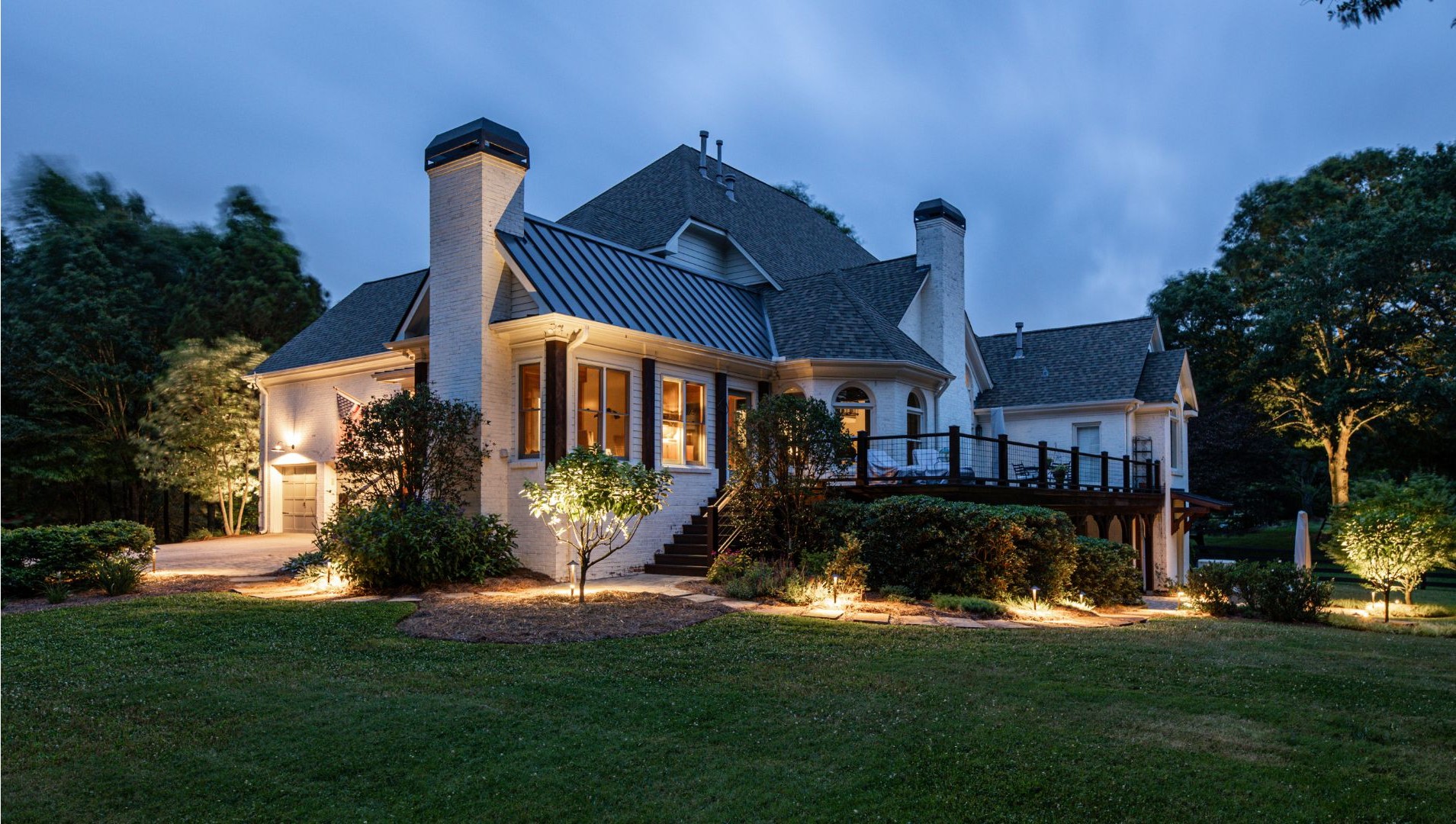
Light Your Braselton Paths Smarter, Not Harder
Solar path lights can be a simple way to make your Braselton walkways safer and more welcoming. When they work well, they give you soft, automatic light along driveways, garden paths, and steps without any wires or switches to worry about.
Many homeowners are drawn to solar outdoor lighting in Braselton, GA because it seems easy. You stick the light in the ground, the sun does the work, and you enjoy free light at night. But real yards are not perfect test labs. Shade from trees, Georgia clay, soggy spots, and everyday weather can keep those lights from living up to the box promises.
In this guide, we will walk through how solar path lights really behave in local yards, how to place and space them for better results, and what kind of run time you can realistically expect. We will also talk about when it makes sense to bring in a professional outdoor lighting designer for a more reliable, long-term solution.
How Solar Path Lights Really Work in Georgia Yards
Solar path lights are simple on the outside, but there is a lot going on inside that small fixture. Each light usually has:
- A solar panel on top that collects sunlight
- A rechargeable battery that stores that energy
- A small LED light that uses the stored power at night
- A sensor that tells the light when it is dark outside
During the day, the panel turns sunlight into energy and sends it to the battery. After sunset, the sensor turns the light on and the battery slowly empties as the LED shines.
In Braselton, the climate has a big impact on this process. We see:
- Hot, humid summers that can stress batteries and plastic parts
- Frequent storms that bring clouds, heavy rain, and wind
- Pollen that settles on solar panels like a yellow blanket
- Days that swing between bright sun and full cloud cover
All of this changes how well panels charge and how long your lights run each night. On a clear, sunny day, your batteries may charge enough for many hours of light. After a stormy, overcast day, that same light may fade much earlier in the evening.
Seasonal changes matter too. As spring moves in and the days get longer, your panels have more time to charge, which is good. At the same time, pollen can build up on the panels and block some of the sunlight. Spring thunderstorms can knock fixtures out of line or splash mud and debris over the panels. So you will often see your lights shift from bright and steady to dim and patchy if they are not cleaned and checked from time to time.
Smarter Placement for Shade, Soil, and Soggy Spots
Shade is usually the biggest reason solar outdoor lighting in Braselton, GA does not perform well. A light can sit in full sun at noon but still be a poor spot for charging if:
- A large tree shades it in the morning or late afternoon
- A roofline or porch casts a long shadow across it
- Vehicles or trash cans block the sun for part of the day
To judge a location, check it several times: mid morning, early afternoon, and late afternoon. If a light gets less than a few good hours of direct sun, it will likely give short or weak light at night.
Soil conditions also affect your path light success. In our area, you often deal with soft clay or packed, rocky ground. When placing lights:
- Push stakes deep enough that they do not wobble or lean
- Avoid spots where mower wheels or trimmers will hit them
- Keep lights far enough from edges that mulch or gravel does not bury them
Drainage matters more than many people think. Low spots that hold water can:
- Shorten the life of fixtures and batteries
- Let lights tilt or slowly sink into soft mud
- Lead to algae, dirt, and debris covering the panel
Whenever you can, place solar path lights on slightly higher ground along your walkway, where water does not sit after rain. For driveways and long front walks, look for the high side of the grade instead of the lowest dip.
Getting Path Light Spacing and Brightness Right
Most boxes suggest spacing path lights about 5 to 8 feet apart. That can be a helpful starting point, but yard layouts are rarely that simple. Curved or sloped walks in Braselton neighborhoods often need different spacing so light looks even and safe.
Think about:
- Narrow garden paths: closer spacing and lower brightness can feel cozy
- Wide driveways: wider spacing, but maybe brighter or taller fixtures
- Curves and corners: place lights closer so you do not end up with dark gaps
Lumen output and color temperature make a big difference in how the space feels. For basic safety on a path, you usually do not need very high lumens. Too much light can feel harsh and create glare. Warm white tones often look better with Southern brick, stone, and lush plantings, giving you a softer glow instead of a cold, bluish light.
Before you commit to final positions, do a quick test:
- Set the lights out on the ground without pressing stakes in fully
- Turn them on at dusk and review the path from different angles
- Adjust distances and angles to soften hot spots and fill dark gaps
You want a gentle, overlapping pool of light, not a bright, straight runway. If the path feels uneven, move the lights a foot closer or farther apart until it looks balanced.
Real-World Run Time and Maintenance Expectations
Product packages often promise many hours of run time, but that is usually in perfect test conditions. In a real Braselton yard with clouds, partial shade, pollen, and heat, you may see less than the maximum.
Many homeowners notice that:
- Lights are brightest for the first few hours after dark
- After cloudy days, they may fade well before bedtime
- Over time, batteries hold less charge and run time drops
Basic maintenance can give you better performance:
- Wipe pollen, dust, and bird droppings off panels with a soft cloth
- Check after storms for tilted fixtures or loose stakes
- Clear away mulch, leaves, and grass clippings that shade the panel
Rechargeable batteries inside solar lights do not last forever. When you see lights staying dim even after sunny days, new batteries may help. Keep in mind, though, that bargain fixtures can wear out faster. UV rays, heat, and moisture all work on cheaper plastics and seals. At some point, replacing low-quality lights over and over can become more frustrating than simply choosing better fixtures or a different lighting approach.
When to Upgrade From DIY Solar to Pro Lighting Design
Solar lights are handy, but they are not the right answer for every spot. Some warning signs that it might be time to think beyond DIY solar include:
- Paths that still look dim or patchy no matter how you move the lights
- Lights that fail after every heavy rain or storm
- Steps, slopes, or uneven areas that still feel like trip hazards at night
- Shaded walkways where panels never get a solid charge
A professional lighting design can solve these issues with low-voltage LED fixtures, custom placement, and careful planning. Outdoor Lighting Perspectives of Atlanta designs, installs, and maintains outdoor lighting systems for homes and businesses throughout the greater Atlanta area, including Braselton. We can also blend a few solar fixtures in with a wired system when that makes sense, so you get reliable light where you need it and simple solar accents where they actually work well.
Thoughtful planning around shade, soil, and drainage, combined with realistic expectations about run time and brightness, can help your solar path lights do a better job. When your paths, steps, and driveways demand consistent, long lasting light, a professionally designed system can give you peace of mind and a welcoming look night after night.
Get Started With Your Project Today
Transform your evenings with thoughtfully designed solar outdoor lighting in Braselton, GA tailored to your home and lifestyle. At Outdoor Lighting Perspectives of Atlanta, we listen to your goals and craft a custom lighting plan that highlights your property’s best features. Let us walk you through design options, product choices, and professional installation so you feel confident at every step. Ready to talk details or schedule a consultation? Simply contact us and we will help you get started.