

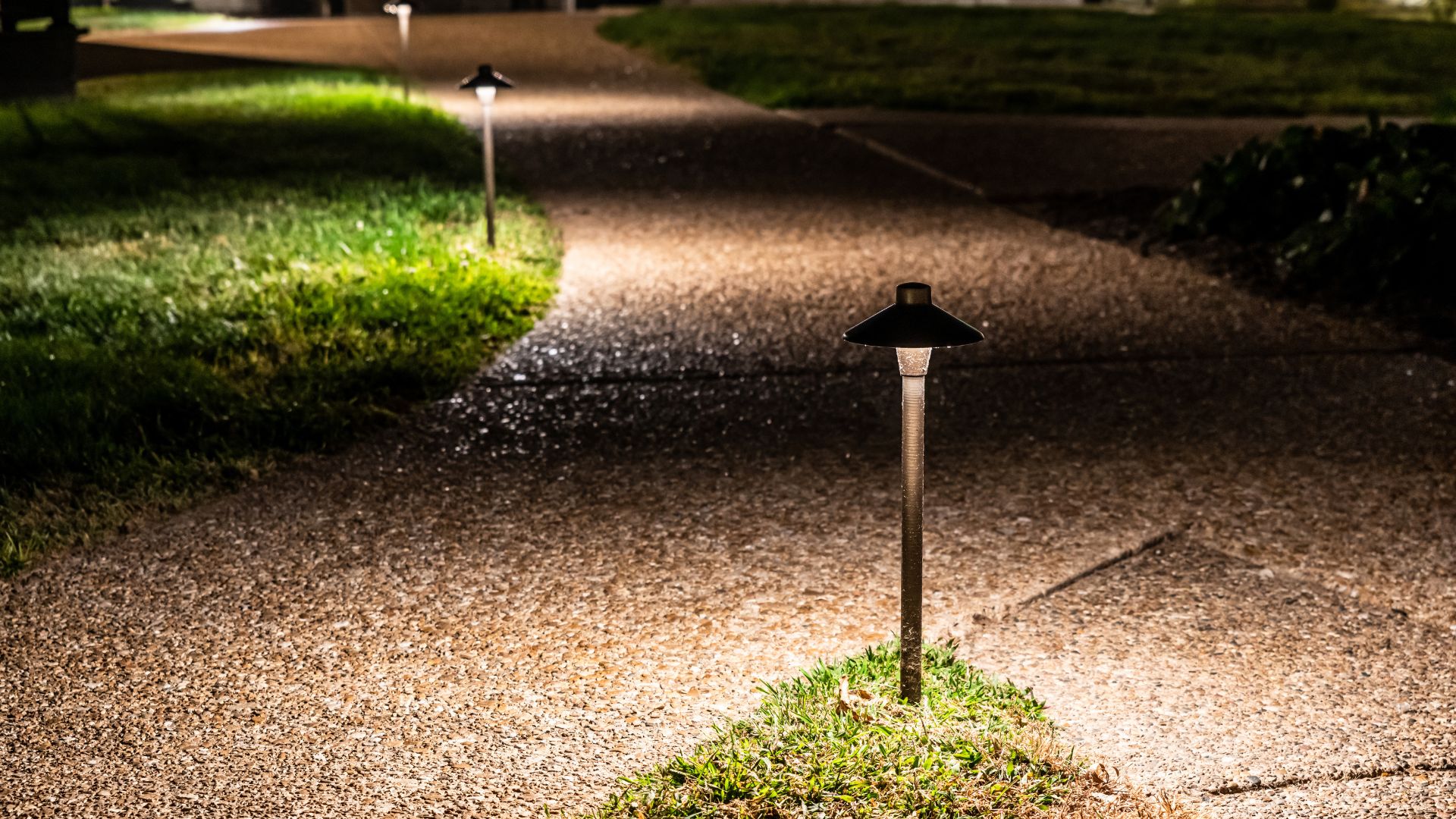
Brighter Spring Evenings on Your Braselton Walkways
Safe walkways start with simple, steady light right where you put your feet. As evenings stay lighter and the weather feels nicer in Braselton, many homeowners set out solar path lights to make walks to the front door or around the yard feel easier and safer. The idea is great, but the way those lights are placed and spaced makes a huge difference.
When walkways are lit well, kids can run around longer, guests can see every step, and you can move around your yard without grabbing a flashlight. When they are lit poorly, you still end up with dark spots, glare in your eyes, and lights knocked over by lawn tools. We want to walk through how placement, spacing, and realistic brightness expectations can make solar outdoor lighting in Braselton, GA, both safe and beautiful.
How Solar Path Lights Really Perform in Braselton Yards
Solar path lights are simple. Each light usually has:
- A small solar panel on top
- A battery that stores energy from the sun
- An LED inside the fixture
- A sensor to turn the light on at dusk and off at dawn
During the day, the panel charges the battery. After dark, the battery feeds the LED. That sounds easy, but real yards in North Georgia are not perfect test sites. Shade from big trees, rooflines, or tall shrubs can limit how much energy each light gets. On cloudy or stormy days, the batteries do not charge as much, which can shorten runtime.
Packaging often shows very bright photos and long runtime claims. In real life, what you get depends on lumens, which is a measure of brightness. As a simple guide:
- Accent lights are usually low lumens, enough to glow on a plant or small feature
- Pathway lights are mid-range, enough to outline a walkway and see edges
- Security lights are much brighter and made to light broad areas
For steps and edges, you want enough light to see contrast and changes, not flood the yard like a stadium. In many solar fixtures, the light is soft, which is fine as long as you put them closer together and in the right spots.
Braselton yards have a few local factors to keep in mind:
- Tree canopies can keep panels in shade for most of the day
- Afternoon storms can bring clouds, debris, and water spots on the panels
- Pollen and dust in spring can coat panels and cut charging power
All of this affects how long your lights stay on and how bright they seem by the end of the night.
Smart Placement for Safer, More Attractive Walkways
Good placement is about lighting the surface you walk on, not the sky or your neighbor’s windows. Focus first on safety points:
- Steps and stairs
- Places where the ground changes height
- Curves in a path
- Where the driveway meets the walkway
- The approach to your front or back porch
Put the light so it washes across the walking surface from the side, instead of pointing straight up or directly into people’s eyes. Aim for a gentle glow that brushes over the ground. If the light catches you right in the face when you walk, move or angle it so it is less harsh.
Try to avoid a few common mistakes:
- Lights set too close to the very edge of a path where they get kicked or knocked over
- Fixtures in the line of a mower wheel or string trimmer
- Lights hidden behind tall plants where they do not help the path at all
Use your hardscape and landscaping to your advantage. Placing lights in mulch beds, along stone borders, or next to planting lines can create a soft guiding line. Instead of bright spots and dark gaps, you get a smoother flow of light that draws the eye along the path.
Getting Path Light Spacing Right From the Start
Spacing is where many solar path lighting layouts go wrong. Too far apart, and the path feels patchy. Too close, and it can look cluttered and still not solve the dark spots.
A basic starting point for many solar path lights is about 5 to 8 feet between fixtures. Then adjust based on what you see:
- Tighten spacing near steps or tricky corners
- Bring lights closer together on very dark paths or uneven surfaces
- Widen spacing near wide, open sections to keep things balanced visually
Brightness and beam spread matter too. Dimmer solar lights need to be closer to overlap their light pools. Higher-output fixtures with a wide spread can sit farther apart and still keep the ground even. Color temperature, which is how warm or cool the light looks, affects feel more than safety, but slightly warmer white can feel more welcoming around a home.
One of the best ways to check your layout is a simple nighttime test:
- Set the lights in the ground, but do not fully commit the placement
- Wait for dark, then walk the path at a normal pace
- Look for shadows, trip points, and “dead spots” between lights
- Shift fixtures a foot or two at a time until the path feels smooth and comfortable
This quick test can save a lot of frustration later.
When Solar Is Not Enough and What to Do Instead
Solar does not work well everywhere. Some spots in Braselton yards stay shaded most of the day, especially under mature trees. Very long walkways or high-security spots, like side yards along fences or near dark corners of a driveway, may need more reliable light than solar can offer after several cloudy days.
In those areas, professionally installed low-voltage LED systems are often a better fit. Since they are powered from a central transformer, they keep the same brightness night after night, even after storms. They can provide brighter and more even coverage and use fixtures built for long-term outdoor use.
Many properties end up with a hybrid plan that works very well:
- Solar accent lights in garden beds, around decorative features, or along low-risk edges
- Hardwired LED path lights for main walkways, driveways, steps, and entries
This way you still get the easy charm of solar where it makes sense, and steady, dependable light where safety is most important.
Professional Tips to Maximize Solar Light Lifespan
Solar lights need a bit of care if you want them to keep doing their job. Seasonal maintenance in Braselton is simple but makes a big difference:
- Wipe pollen, dust, and bird droppings off the panels with a soft cloth
- Check for storm damage, like bent stakes or loose tops
- Trim new plant growth that throws shade on the panels
Over time, you may notice some common issues:
- Fading brightness as batteries age and stop holding a full charge
- Cracked or leaning stakes from soil shifts or lawn equipment
- Clouded lenses that scatter light and make it look dim
Sometimes a quick battery replacement can stretch a bit more life out of a favorite fixture. Other times, it makes more sense to upgrade to a better quality light or to shift a key area to low-voltage.
A professional outdoor lighting designer can help you sort through the options, choose higher-quality solar fixtures, and plan a layout that respects how your yard will change over the years. At Outdoor Lighting Perspectives of Atlanta, we work with Braselton homeowners to blend solar outdoor lighting in Braselton, GA with wired systems so walkways stay safe, welcoming, and beautiful as your landscape grows and seasons change.