

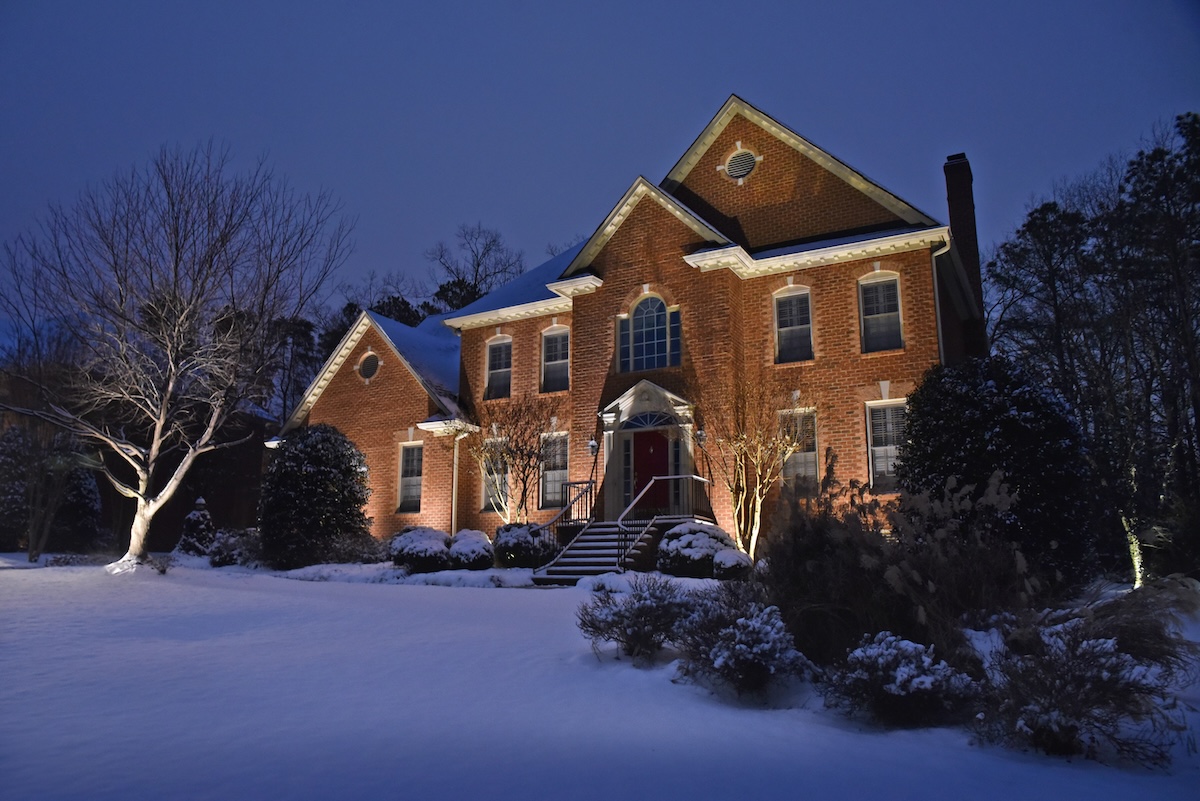
Chicago winters ask a lot of outdoor lighting, and for that matter, people. Snow can cover fixtures and ice and freezing conditions can make it harder to do regular maintenance. Landscapes also change as plants die back and snow accumulates. Ground conditions shift. A lighting system that worked just fine in September may have problems once the winter arrives.
That doesn’t mean every system will develop issues in freezing weather. What it does mean is that fall is a useful time to inspect outdoor lighting and fix existing problems. That way, the system will be ready for the months to come.
Check Fixtures Before They Disappear Under Snow
It’s easy to forget about low-mounted landscape and pathway fixtures once the ground is covered. So before winter, walk your property after dark and look for lights that have stopped working or shifted out of position. Look also for lights that are blocked by vegetation or debris.
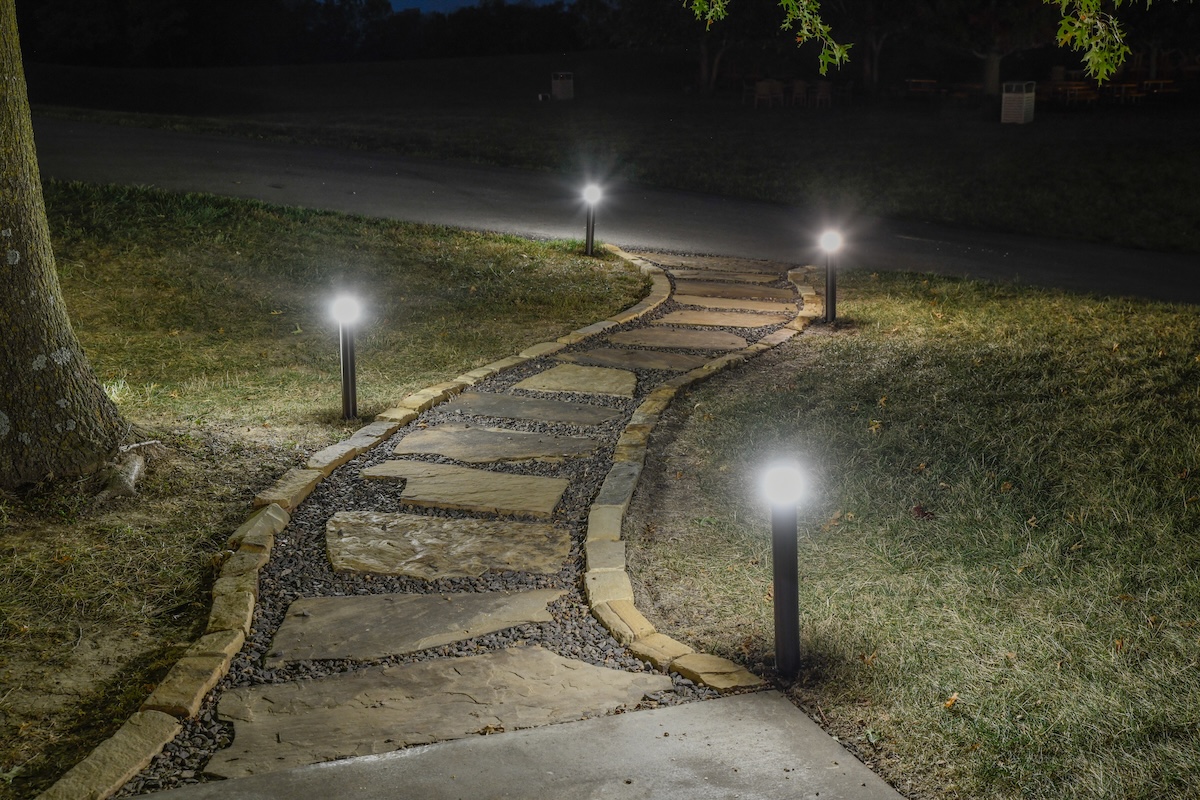
Fixtures often work just fine even while their beams go to the wrong place. Cleaning the lenses and adjusting fixture aim can make the system work as intended without any replacements needed. The same can be said if mulch and fallen leaves are removed from fixtures.
As for snow removal, make note of where low fixtures are. That way, you’ll be less likely to strike them by mistake with a snow shovel on some cold winter day.
Inspect Wiring and Connections
Low-voltage outdoor lighting systems use wiring and connections that must stand up to changing outdoor conditions. That’s why winter maintenance should include checking for exposed wiring and damaged insulation as well as disturbed connections. The presence of any of these means a professional needs to take a look.
Landscaping, erosion, lawn care, and even just day-to-day living can cause wires to become exposed. Connections can often fail due to moisture or damage. And when this happens, homeowners and property managers would be wise to avoid making electric repairs themselves without proper expertise. A professional technician can identify which components need to be adjusted or repaired.
Don't Forget the Transformer and Controls
The transformer is an important part of a low-voltage landscape lighting system. Maintenance should include checking its condition and connections. The same is true of controls and timers, particularly as the days become shorter. Timers that worked in summer may not turn on when they’re needed in the winter.
Depending on the system, adjusting an astronomical timer or other lighting controls might be enough to restore the intended schedule. Either way, it’s something a technician can do for you.
Account for Changes in the Winter Landscape
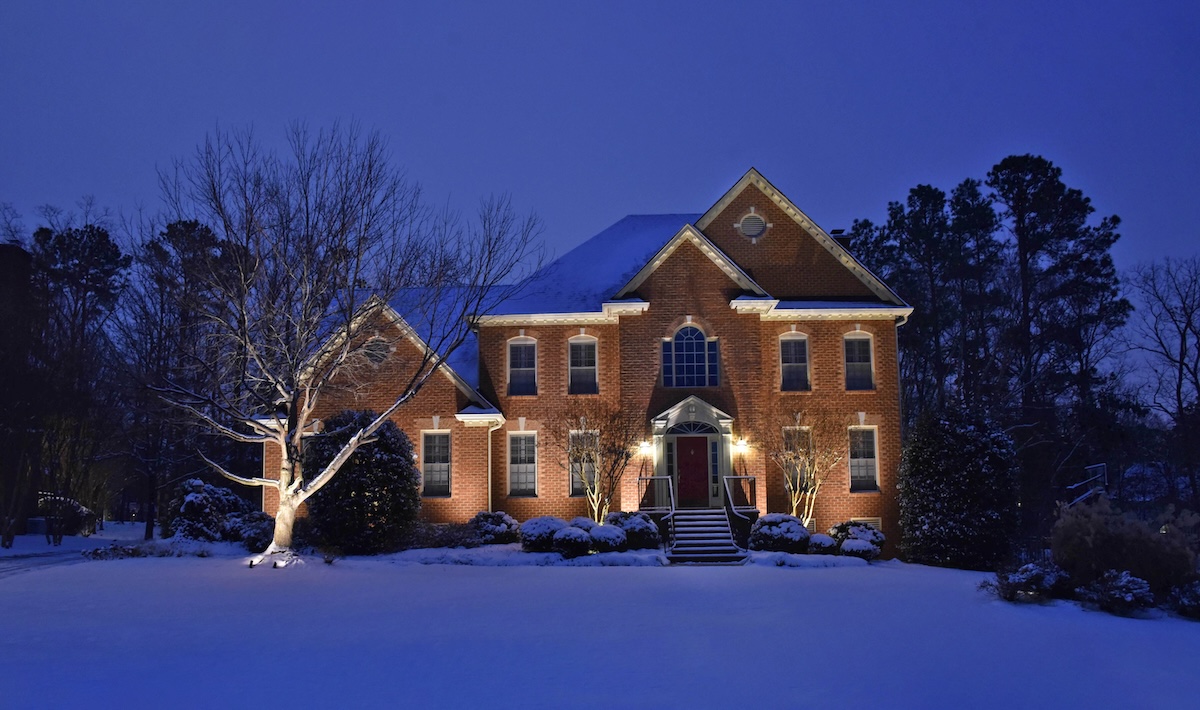
A Chicago landscape looks different in January than it does in July. Trees lose their leaves and branches suddenly become exposed. Planting beds become less prominent. Even snow can change the way light reflects and alter the look of surfaces nearby.
Some fixtures may benefit from seasonal re-aiming. Others might need to be turned off for the season. That’s why outdoor lighting maintenance is not just about keeping every lamp on but also about keeping the design as a whole cohesive even as seasons change.
Plan Professional Maintenance Before Problems Accumulate
Routine maintenance can help identify minor issues before they’re not minor any more. This is why Outdoor Lighting Perspectives of Chicago offers an Annual Maintenance Plan covering system inspections and ongoing service.
Professional maintenance can include checking fixtures, wiring, connections, transformers, and controls, as well as cleaning and adjusting lights. That is especially useful when the system covers a large property or includes hard-to-reach fixtures.
Call Outdoor Lighting Perspectives for outdoor lighting companies near me.
For experts in outdoor lighting design, installation, and maintenance, call one of the most trusted names in the business. Outdoor Lighting Perspectives is eager to speak with you. Call us today at (630) 345-4249.
Frequently Asked Questions
Can outdoor landscape lights stay installed through winter?
Yes, properly installed outdoor lighting is meant for year-round use. Individual components will still require maintenance over time to stay in good working order.
Should snow be cleared off landscape lights?
Try to keep snow from piling up on fixtures, but don’t chip or strike them with tools. If you damage equipment, have it inspected.
What causes lights to stop working in winter?
There are many reasons that this can happen, such as failed components, damaged connections, wiring problems, moisture intrusion, or control issues. Diagnosis depends on the system.