

Hudson architectural lighting is designed to illuminate the home itself, highlighting major structural elements like the facade, columns, stonework, and entryways. Hudson landscape lighting, by contrast, focuses on the surrounding property, bringing light to trees, gardens, pathways, and outdoor living spaces. Both types of lighting can work together as part of a single, cohesive low-voltage lighting design.
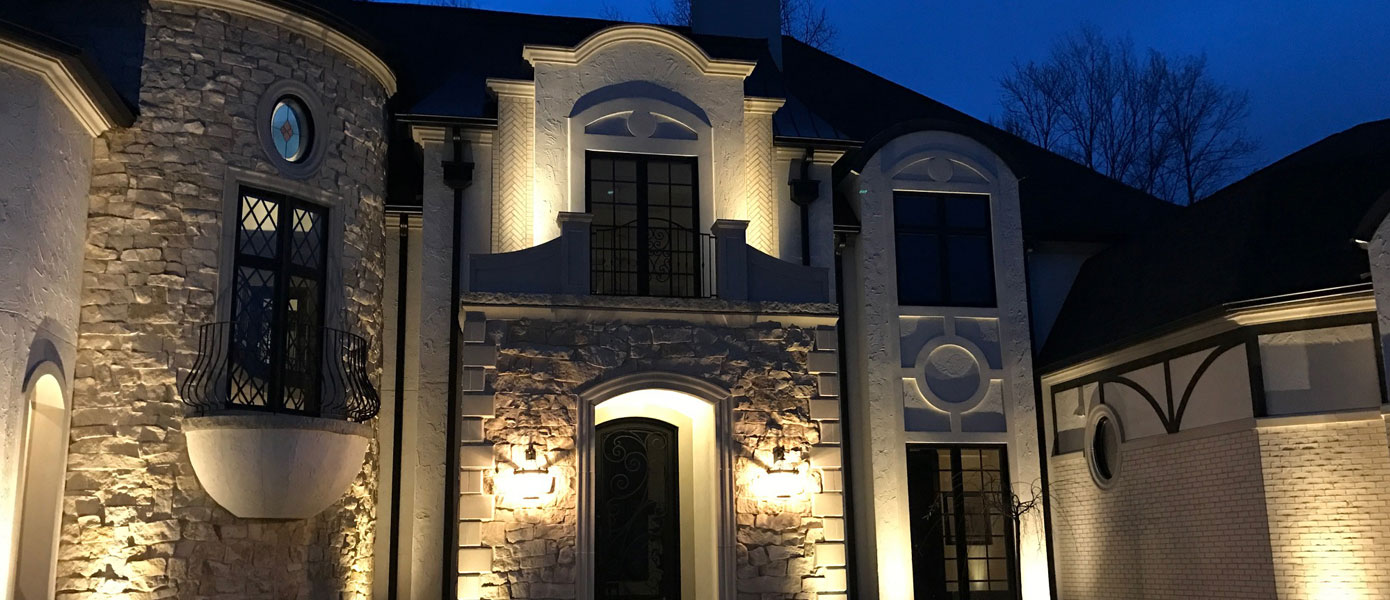
The main difference between architectural and landscape lighting comes down to the subject. Architectural lighting is meant to make the structure of your home look its best by using well-placed fixtures to show off its textures and shapes. Landscape lighting does something similar, but for the surrounding yard. Uplighting turns mature trees into dramatic focal points, subtle accents bring garden beds to life, pathway lights help illuminate walkways, and downlighting from tree branches casts a soft, natural glow over lawns and patios.
Though these categories of lighting sound separate, they’re not as different as they sound. Both can use low-voltage LEDs, uplighting, downlighting, and carefully controlled beams. The main change is what the lights are used to illuminate.
For many Hudson homes, the most attractive lighting design is one that uses multiple types of light at once. Imagine an illuminated stone facade, a warm entryway, subtle path lights, and a lit mature tree beyond the house. Each element contributes something distinct, uniting the home and landscape instead of creating separate islands of light.
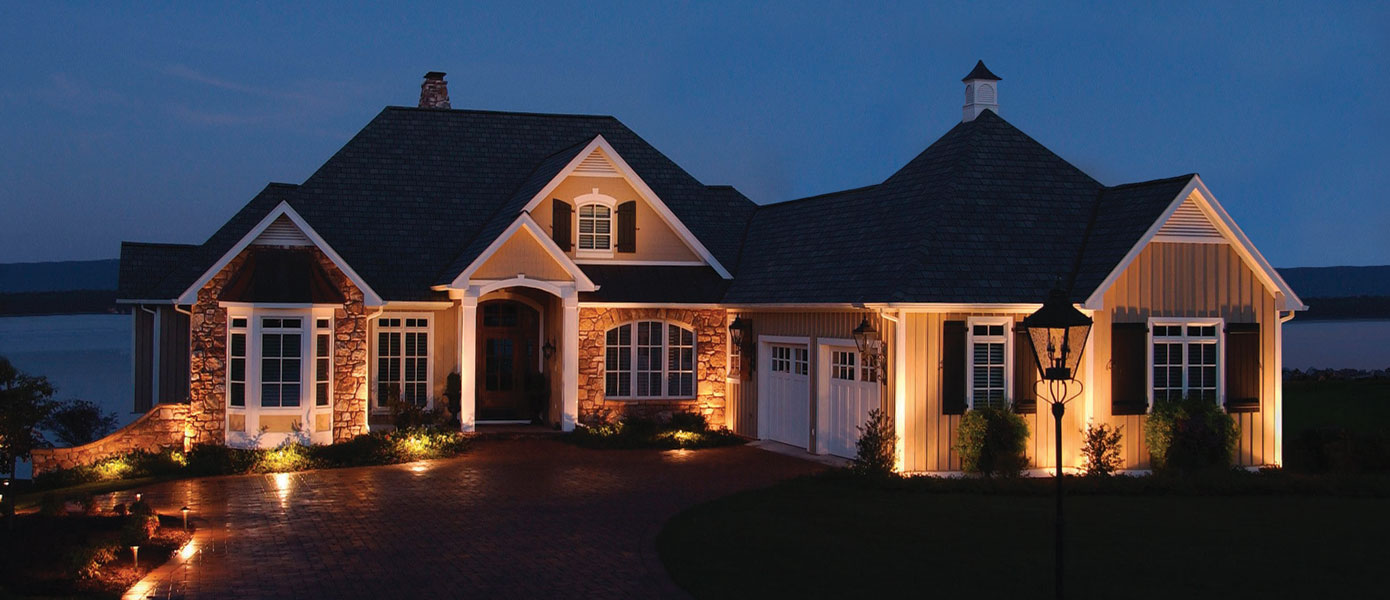
You don’t necessarily need both architectural and landscape lighting together. Some properties do well with one or the other. Every design is different because every property is different. Talking to a lighting expert is the best way to know what will work well where you live.
Outdoor Lighting Perspectives of Northern Ohio specializes in architectural and landscape lighting and offers complimentary design consultations. For help choosing the right approach for your Hudson home, call (440) 336-8650.