

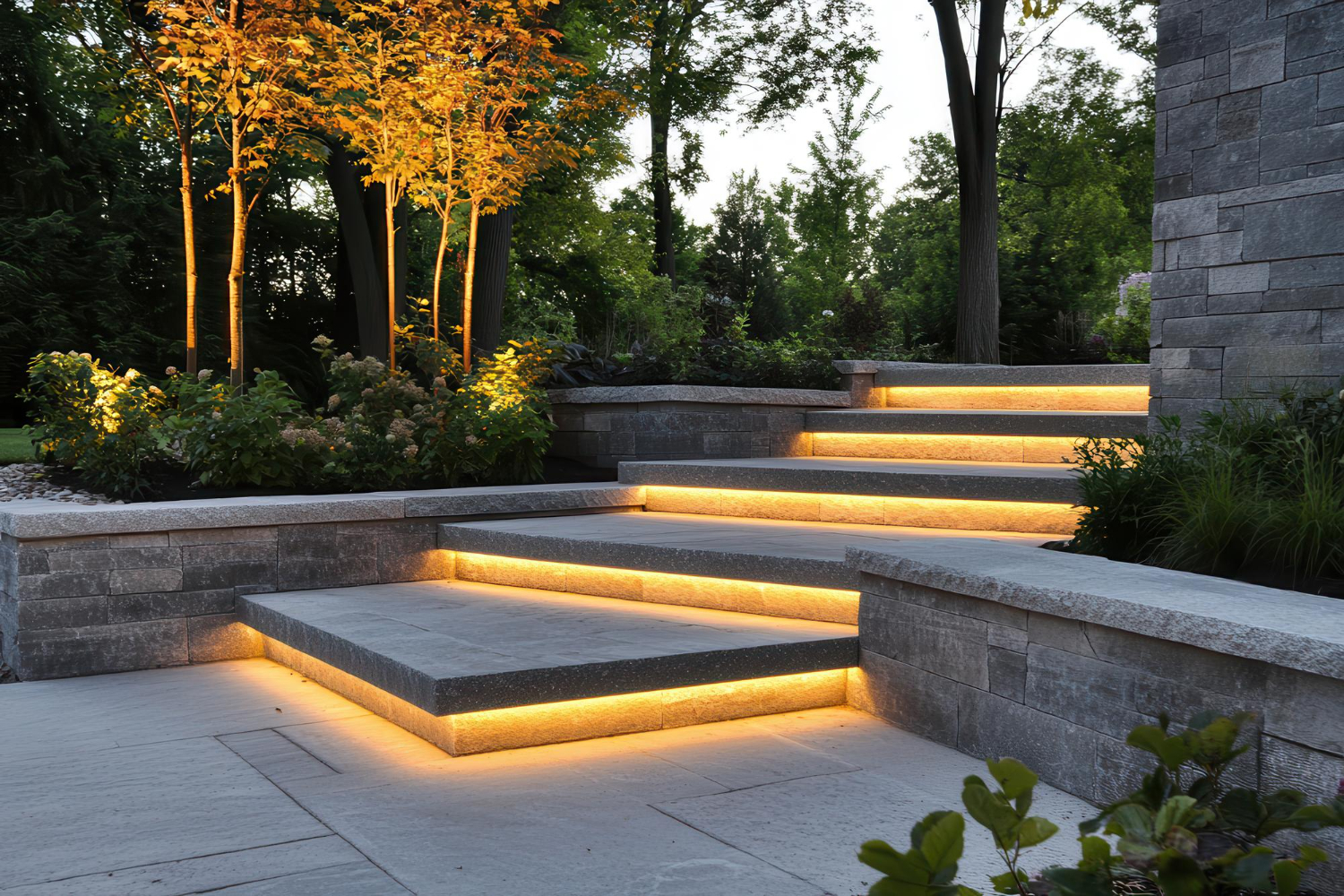
Elevate Atlanta Nights with Safer, Softer Steps
Outdoor step lighting does more than make it easier to see at night. The right lighting can turn plain stairs into a soft, welcoming path that feels safe and looks great from the street or the backyard. When steps are well lit, family and guests move with confidence, even when their hands are full or kids are running around.
In the Atlanta area, outdoor stairs get a lot of use, from pool decks and porches to front entries and side yards. Good lighting helps prevent trips and falls, but it also sets the tone for every evening outside. The three design choices that shape that experience are color temperature, beam spread, and glare control. At Outdoor Lighting Perspectives of Atlanta, we design custom step lighting systems around these details so they fit your home, your style, and the way you live outdoors.
Why Color Temperature Sets the Mood on Your Steps
Color temperature is how warm or cool the light looks to your eyes. It is measured in Kelvin (K). Lower numbers look warmer, like candlelight. Higher numbers look cooler and more bluish, like daylight or some indoor office lighting.
Here is how common color ranges work for outdoor step lighting:
- 2700K to 3000K: warm, cozy light, soft on skin tones, great for front entries, porches, decks, and social areas
- 3000K to 3500K: neutral white, a little crisper, often used on more modern homes or where you want a clean, simple look
On many Atlanta homes, we see a lot of brick, stone, and wood. Warm color temperatures in the 2700K to 3000K range usually bring out the rich reds and browns in brick, the warmth in wood, and the deep greens in landscaping. Steps in these tones feel inviting instead of harsh, especially when viewed from inside the house.
Neutral white around 3000K to 3500K can work well when:
- The home has modern or contemporary lines
- There is a lot of light-colored stone or concrete
- You want a crisp, gallery-style look along walls or floating stairs
The key is keeping things consistent. If your pathways and landscape lighting are warm, but your steps are a cool white, the space can feel broken up and a bit uncomfortable at night. We usually guide homeowners to:
- Match step light color to nearby path and landscape lighting
- Keep front entry lighting warm and welcoming
- Use slightly cooler tones only if they truly fit the architecture
When color temperature is planned as part of a full design, your steps blend right in with the rest of the outdoor lighting, instead of standing out in a strange way.
Shaping Light With the Right Beam Spread on Stairs
Beam spread is how wide or narrow the light comes out of a fixture. Think of it like the difference between a focused flashlight and a soft, wide lantern. On steps, beam spread has a big effect on safety and style.
Narrow beam spreads work well when you want to:
- Highlight single treads or edges
- Show off stone or brick risers
- Accent a side wall or railing detail
Wider beam spreads are better when your goal is clear, even light across the full stair run. They help reduce dark patches and bright hot spots that make it hard for the eye to judge depth.
Placement matters just as much as beam spread. Common options include:
- Under-tread lights tucked beneath the lip of each step
- Side-mounted step lights on walls or posts next to the stairs
- Recessed fixtures in retaining walls beside the stairway
Each style throws light in a slightly different pattern. A wide beam under the tread can wash the step surface nicely. A more focused beam in a wall-mounted fixture might give a stripe of light across the center of each step. If beam spreads are not chosen carefully, you can end up with alternating bright and dark bands, which feel uneasy to walk on.
Atlanta’s frequent rain and spring pollen can make poor beam choices even more noticeable. Water and dust on the treads catch uneven light and can make steps look slick or patchy. A professional design takes all of this into account so your stairs look calm and balanced even after a storm.
Glare Control for Comfortable, Eye-Friendly Steps
Glare happens when light shines directly into your eyes instead of onto the surface you want to see. On steps, glare can be just as bad as darkness. If guests are squinting at bright bulbs, they may miss the edge of a step or feel unsure about where to place their feet.
Good glare control is about shaping and shielding the light so you see the steps, not the source. Common glare control tools include:
- Shielded fixtures that hide the bulb from direct view
- Louvered or hooded step lights that aim light down and out
- Recessed fixtures set into walls so the light is tucked away
- Lower light levels used more thoughtfully instead of one very bright fixture
Many Atlanta homes sit on hills or have elevated decks, multi-level patios, and long driveways. In these layouts, step lights might be visible from inside windows, from the street, or from nearby neighbors. Without glare control, you can get bright spots that spoil the view of your garden, pool, or skyline.
When step lighting is designed to avoid direct glare, your eyes stay relaxed. Night vision is better, colors look more natural, and you can enjoy the landscape, not just the lights. The result is a calm, comfortable ambiance that feels like an extension of your indoor living space.
Designing Outdoor Step Lighting for Atlanta’s Climate
Atlanta’s weather puts outdoor lighting to the test. Humid summers, heavy spring rains, and the occasional cold snap all affect fixtures, wiring, and connections, especially on stairs where water can collect or run down.
For long-lasting outdoor step lighting, we pay close attention to:
- Quality LED fixtures designed for outdoor use
- Weather-resistant finishes that hold up to moisture and heat
- Proper mounting so fixtures stay secure on wood, stone, brick, or composite
- Sealed connections that keep water out of wiring and junction points
Brightness levels matter too. Steps need to be bright enough for clear footing, but not so bright that they overpower nearby path or garden lights. Automatic controls, like timers, photocells, or smart systems, help your lights adjust to changing daylight. That way, steps come on when you need them, from early winter evenings to late summer nights.
Over time, even the best system needs care. Pollen, dirt, and cobwebs can cloud lenses and reduce light levels. Fixtures may shift slightly, plants may grow, and new outdoor features might be added. Regular maintenance, such as cleaning lenses, checking the aim, and upgrading fixtures when needed, keeps your step lighting safe, attractive, and in sync with the rest of your property.
Light Your Steps with Confidence This Spring
As outdoor time increases, it is a good moment to take a slow walk around your property after dark. Look at your steps and stairways from different angles. Notice any dark areas, bright bulbs in your line of sight, or color temperatures that do not match nearby lighting. These are signs that your outdoor step lighting could work better for you.
When color temperature, beam spread, and glare control are all planned together, steps stop feeling like simple in-between zones. They become part of the nighttime scene, guiding people gently from the driveway to the door, from the porch to the yard, or from the house to the pool. At Outdoor Lighting Perspectives of Atlanta, we design, install, and maintain custom outdoor step lighting systems with premium LED fixtures and long-term service, so your stairs feel safe, soft, and welcoming every night.
Get Started With Your Project Today
Bring safety, comfort, and style to every step on your property with professionally designed outdoor step lighting tailored to your home. At Outdoor Lighting Perspectives of Atlanta, we take care of every detail from design to installation so your pathways and stairs feel welcoming after dark. If you are ready to discuss your ideas or schedule a design consultation, contact us today.