

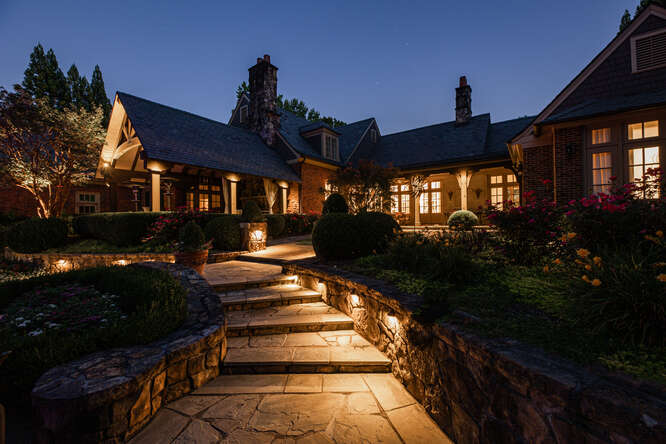
Light Your Hillside Steps with Safety and Style
Outdoor step lighting is one of the most important parts of a safe hillside home, especially in a hilly city like Atlanta. Steep driveways, terraced yards, and long sets of stairs can look beautiful, but they can also become dark, slick, and hard to see at night. Porch lights and garage lights rarely reach every tread, so shadows and blind spots are common.
Thoughtful outdoor step lighting helps guide every footstep. It gives you a clear view of each riser and landing, even after heavy rain or when guests are walking your steps for the first time. On sloped lots, that safety needs to work hand in hand with drainage, erosion control, and durable fixtures that will not fail the first time the red clay shifts. That balance is what we focus on when we design lighting for hillside homes.
Why Hillside Steps Need More Than Basic Lighting
Stairs on a slope behave differently than a short, straight set by a front door. You may have:
- Long runs of steps between street and front entry
- Curved stairs that turn with the hill
- Irregular risers or deeper treads built into the slope
In low light or wet conditions, all of these can be harder to judge. Simple overhead lights can create harsh glare on the top steps and leave the bottom in darkness. When the steps are damp, that can turn into a serious trip or slip risk.
Layered outdoor step lighting gives your eyes more help. Instead of one bright source, we combine:
- Tread lights that graze the step surface
- Small railing or post lights that guide hands and feet
- Nearby path lights that fill in shadows and show edges
This softer, layered approach reduces glare while clearly outlining every step. It also looks more welcoming and comfortable for family and guests. At night, a well-lit stairway can visually anchor a hillside home, drawing the eye toward the entry and tying upper and lower levels together. That kind of thoughtful lighting can improve curb appeal and how you use your outdoor spaces after dark.
Managing Drainage and Erosion Around Step Lights
On Atlanta hillsides, water rarely behaves politely. Heavy rain can turn steps into mini streams. Our clay soil tends to hold water on the surface, then send it running along the path of least resistance, which is often your stairway.
That runoff can:
- Wash mulch onto treads and landings
- Undercut or shift steps over time
- Flood light housings that sit too low
If a step light is placed right where water flows, it may sit in a puddle or get filled with silt. Over time, that can cause failures and constant maintenance.
Good design respects the water first. When we plan outdoor step lighting on a slope, we look for ways to keep fixtures above typical flow lines and give water a better route. That might include:
- Slightly raising fixtures within risers or side walls
- Using gravel beds or stone borders to catch and drain runoff
- Adding weep holes or drains near fixtures so water can escape
Behind the scenes, construction details matter just as much. Sealed conduits help protect wiring from moisture. Waterproof junction boxes give connections a safe, dry home. Flexible wiring routes allow for small shifts in soil or hardscape without pulling on fixtures. All of this helps your lighting keep working as the hillside settles and the ground moves over time.
Choosing Durable Fixtures for Sloped Terrain
Not every step light is built to live on a wet, sloped Atlanta property. On a hillside, fixtures take more abuse from water, soil movement, and everyday foot traffic.
Fixture materials make a big difference. Cheaper plastic or low-grade metal lights often crack, fade, or corrode in humid weather. For long stair runs on a hill, we look toward stronger options like marine-grade aluminum or solid brass step lights that stand up better to moisture and temperature swings.
Key features we pay attention to include:
- Gasketed, IP-rated housings to help keep water out
- Tempered glass or strong lenses that resist impact and clouding
- Premium LEDs designed to handle outdoor conditions for many years
Mounting style also matters. On hillside steps, recessed or flush-mounted fixtures are usually safer than bulky surface mounts. When the face of the light sits flush with the riser or side wall, there is less to trip over and less chance of a shoe catching the edge. We then aim the beam so it washes across the full tread, not straight into your eyes, which keeps you sure-footed without glare.
Smart Design Tips for Beautiful, Functional Step Lighting
A hillside staircase should feel calm and inviting at night, not like a runway. That is where careful light levels and spacing come in.
We often recommend:
- Lower-lumen step lights placed at regular, but not cramped, intervals
- Dimming options to fine-tune brightness for different occasions
- Mixing step, path, and accent lights so no single type overpowers the others
Balanced brightness keeps the focus on safety while creating a relaxed, upscale look. The fixtures themselves should blend in during the day, so we coordinate style and finish with your existing hardscape. For example, we match colors with stone, brick, railings, or deck posts so the lights almost disappear until they turn on.
Outdoor step lighting also works best when it fits into the rest of your lighting plan. Tying stair lights into nearby deck, patio, and tree lighting gives a smooth transition from one area to the next. Controls finish the picture. Astronomical timers and smart controls can turn lights on at dusk and off at a set time, adjusting automatically as days get longer or shorter so you are not constantly changing settings.
Professional Installation for Atlanta Hillside Homes
Hillside projects are rarely simple, which is why a careful site assessment comes first. Before placing a single step light, we study:
- Where and how water currently flows during storms
- Soil conditions, including how compacted or loose the clay is
- The way the stairs are built, from poured concrete to stone or wood
- Existing drainage and any problem spots you have noticed
From there, wiring and power are planned around the terrain. On a slope, trenching and conduit placement need extra thought to protect the system from washouts and future erosion. Proper transformer sizing and voltage balancing help ensure that each step light, from the top landing to the bottom, shines with consistent brightness.
Ongoing care keeps everything looking and working its best. In Atlanta, pollen season, leaf drop, and shifting beds can all affect your lighting. Periodic checkups include lens cleaning, checking seals, and adjusting fixtures as plants grow or erosion patterns change. With that kind of attention, your outdoor step lighting can keep your hillside home safe, attractive, and ready for evening use year after year.
Get Started With Your Project Today
Transform your nighttime curb appeal and make every step safer with our custom-designed outdoor step lighting solutions. At Outdoor Lighting Perspectives of Atlanta, we carefully plan each fixture placement to enhance visibility without harsh glare. If you are ready to explore a tailored design for your home, contact us to schedule a complimentary consultation.